
A Nyerere sunset boat safari is a late afternoon cruise along the Rufiji River, usually running two to three hours, timed so the light softens as hippos surface, crocodiles line the sandbanks and elephants come down to drink. Most camps in Nyerere National Park, the vast southern Tanzania reserve carved from the old Selous, run these trips daily in the dry season, ending with a cold drink on a sandbank as the sun drops behind the palms.
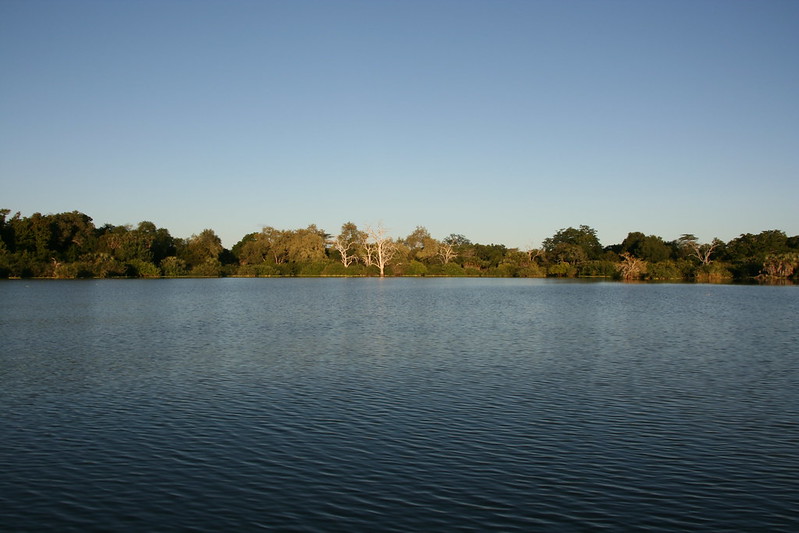
The Rufiji is the reason people book this park over the northern circuit. It is one of very few places in East Africa where you watch big game from the water rather than a vehicle, and the change in perspective is the whole point. You sit low, the bank slides past at eye level, and animals that would bolt from a Land Cruiser barely lift their heads at a quiet boat. What follows is how the sunset boat safari actually works, what you can reasonably expect to see, which camps run the best trips, and when to come.
What the Rufiji River Sunset Boat Safari Involves
The Rufiji River boat safari is a guided cruise in a small, flat, canopied motorboat, usually carrying six to eight guests plus a guide who doubles as skipper. You set off from a camp jetty or a launch point on the riverbank in the mid to late afternoon, once the worst of the heat has eased. Boats stay close to the bank for much of the run, nosing into side channels and drifting past sandbars where the wildlife gathers.
Trips break into two rough types. A short sunset or dawn cruise runs two to three hours and sticks to the main river. A half day or full day outing pushes further, linking the Rufiji to the chain of lakes behind it, and often carries a light meal and drinks on board. For a first visit the shorter afternoon sunset cruise tends to be the sweet spot, long enough to reach the good sandbanks, short enough that you are not baking on the water for half a day.
Ask your camp whether the boat launches from inside the park or from the riverbank just outside the boundary. A cruise on the stretch outside the park skips the daily conservation fee, which can quietly shave a good chunk off the cost of a short sunset run without changing what you see on the water.
Golden Hour Wildlife on a Rufiji Boat Safari
The reason the boat safari is timed for late afternoon is simple. As the temperature drops, animals move toward the water, and the flat light picks out everything on the bank. Hippos are the constant. Pods of twenty or more wallow in the deeper pools, and by dusk they start hauling out to graze, grunting and jostling in a way you feel through the hull as much as hear. Guides keep a careful distance, because hippos are the animal most worth respecting on this river.
Crocodiles are the other near certainty. The Rufiji holds some of the largest Nile crocodiles in Tanzania, and the afternoon is when you see them best, hauled out on the warm sand with their jaws open to cool. Some are genuinely huge, four metres and more, and passing one at water level is a different feeling to spotting it from a vehicle high on the bank.
Elephants are the prize and the gamble. In the dry months small family groups come down to drink and bathe, and with luck you catch them crossing a shallow channel, trunks up, calves shoved along in the middle. It happens often enough to hope for and rarely enough that you should treat it as a bonus rather than a promise. Sightings are never guaranteed, and any guide worth booking will tell you so before you climb aboard.
Along the banks you will usually pick up giraffe, waterbuck, impala, greater kudu and warthog coming to drink, plus baboons and, in the riverine trees, blue monkeys and the odd troop of black and white colobus. Nile monitor lizards bask on half sunk logs. None of it is staged, and the mix changes trip to trip, which is a large part of why the river holds your attention.
Fish Eagles and Birding on the Sunset Cruise
Even if the big animals stay hidden, the birding on a Rufiji boat safari carries the trip on its own. The African fish eagle is the signature bird here, perched high on a dead branch or throwing its head back for that ringing call that carries across the water. You will hear them before you see them, and most afternoons you get several.
The exposed sandbanks are the birding gold. They are nesting ground for the African skimmer, and resting grounds for storks, herons and packs of waders. Watch the palm fringed banks for malachite and giant kingfishers, white fronted bee eaters and, if the light is right, the deep pink flash of a Boehm’s bee eater. Goliath herons, yellow billed storks and pink backed pelicans work the shallows. Between November and April a wave of migratory waders adds to the count, though that overlaps the wet season, so there is a trade off with river conditions.
African fish eagle. The park’s emblem bird, common on dead riverside trees and vocal at dusk. Almost always seen on an afternoon cruise.
African skimmer. Nests on the open sandbanks, skimming the surface with its lower bill to feed. Best looked for on the exposed bars in the dry season.
Malachite and giant kingfishers. Worked the palm fringed banks and side channels. A patient guide will idle the boat so you get the shot.
Goliath heron and yellow billed stork. Large waders stalking the shallows, easy to pick out against the sand as the light drops.
The Sundowner Drink and Golden Light on the Water
The stretch that gives the sunset boat safari its name is the last hour. As the sun sinks the guide usually pulls onto a quiet sandbank, and out comes a cool box with beers, soft drinks, a gin and tonic, whatever the camp packs. You stand on the sand with a drink while the river turns from brown to gold to a deep red, hippos grunting somewhere out in the channel. It is a low key thing, not a production, and that is exactly why it works.
Timing is deliberate. Guides plan the loop so you are near a good sandbank as the light goes, then run back to camp in the last of the dusk. Bring a light layer, because the moment the sun is down the air off the water cools fast, and pack a head torch for the walk up from the jetty. On the return leg the guide often runs a spotlight along the bank, and the red eyeshine of crocodiles in the beam is a memorable way to close the river safari.
You sit at water level, a drink in hand, and the whole river slows down with the light. It is the one part of a Tanzania safari where doing very little is the entire point.
Best Camps for a Nyerere Boat Safari on the Rufiji
Where you stay shapes the boat safari more than almost anything, because the best camps sit right on the water and launch straight from their own jetties. Sand Rivers, on the banks of the Rufiji itself, is the top end choice and has a long reputation as the finest base for boating in the park, set up by the safari operator Richard Bonham back in 1984. Its position on the river means a cruise starts the moment you step off the deck.
Siwandu is the strong mid priced pick and often called the best value in the park. It sits in a palm forest on the shore of Lake Nzerakera, an oxbow lake joined to the Rufiji, so its canopied boats explore the lake, the main river and a web of side channels without a long transfer first. For a more relaxed budget, Rufiji River Camp and the camps clustered along the northern boundary run morning and sunset cruises at a gentler price, several of them launching from the stretch just outside the park.
Sand Rivers. Top tier, directly on the Rufiji, widely rated the best boating base in the park. Cruises and fly camp sundowners on the river itself.
Siwandu. Mid range, best value in many guides. Boats launch from Lake Nzerakera into the river and channels, strong for both game and birds.
Riverbank and boundary camps. Budget friendly, morning and sunset cruises, often on the stretch outside the park so you can skip the daily conservation fee.
Linking the River to the Lakes on a Full Day Boat Safari
Behind the main channel the Rufiji spreads into a chain of five large lakes, running roughly east to west: Tagalala, Manze, Nzerakera, Siwandu and Mzizimia. A longer boat safari links the river to these lakes, and the shift in mood is worth the extra hours. The lakes are calmer and shallower, ringed with borassus palms and dead trees full of perched raptors, and the concentration of hippos and birdlife on some of them is higher than on the open river.
Full day trips usually pair a boat leg with time ashore, and Lake Tagalala is also the launch point for the park’s hot spring walk, where a short guided stroll leads to warm pools you can sit in. If your schedule allows only one water outing, the afternoon sunset cruise on the main river is the classic. If you have a spare day and the water level is right, adding a lake circuit shows you a quieter, more intimate side of the same system.
Best Time for a Rufiji Sunset Boat Safari
The dry season from June to October is the window most guides point you toward, and for the boat safari specifically it matters more than for a game drive. As the river drops, the sandbanks grow, crocodiles and skimmers spread out on the exposed sand, and animals crowd the shrinking water so the game viewing tightens up. The weather is warm and dry, the light in the late afternoon is clean, and boat access is reliable.
The green season, roughly November to April, brings the migratory waders and green banks, plus lower rates and far fewer boats. The trade off is real, though. Heavy rain can raise and muddy the river, some camps close for part of the long rains, and boating can be interrupted when the water runs high and fast. If birding is your main aim you can make a case for the shoulder months. For the postcard sunset cruise with big game on the banks, aim for the dry season.
June to October, dry season. Prime time. Low water, wide sandbanks, concentrated game, reliable boating and clean afternoon light. The busiest and best window for the sunset cruise.
November to April, green season. Migratory birds, green banks, lower prices, fewer boats. Higher water and rain can disrupt cruises, and some camps close during the long rains.
Planning and Getting to Your Nyerere Boat Safari
Handpicked Nyerere safari packages
Nyerere sits in southern Tanzania, a good distance from the northern parks, and most visitors fly in. Light aircraft run daily from Dar es Salaam to the park’s airstrips, and the hop takes under an hour, dropping you close to the riverside camps so you can be on the water the same afternoon. Driving from Dar is possible and cheaper, but it is a long, rough half day or more, and it eats into the time you would rather spend on the river.
Because the park is built around water, the boat safari pairs naturally with game drives and, at some camps, walking safaris and fly camping. A two or three night stay is enough to fit an afternoon sunset cruise, a morning drive and perhaps a lake circuit without rushing. Pack light neutral clothing, a warm layer for the ride home after dusk, sun cover for the exposed water, insect repellent and binoculars, which earn their place on every minute of a river trip.
Frequently Asked Questions
How much does a Nyerere sunset boat safari cost?
A short two to three hour sunset or dawn cruise on the Rufiji generally runs between about fifty and one hundred and fifty US dollars per person, depending on the camp, the group size and whether the boat launches inside or outside the park. Small shared trips can drop to around twenty five to thirty dollars per person for an hour when a group of five or six splits the boat. Full day outings that link the river to the lakes and include a meal cost more. A cruise on the stretch just outside the park boundary avoids the separate daily conservation fee, which is charged on top when you boat inside the park.
How long does the boat safari last?
A standard sunset or sunrise cruise runs two to three hours, timed so you are near a good sandbank as the light drops. Half day and full day trips run longer, four hours or more, and push out to the chain of lakes behind the main river. For a first river safari the shorter afternoon cruise is usually the right length.
What wildlife will I see on the Rufiji River cruise?
Hippos and crocodiles are near certain on any afternoon trip, often in large numbers. Along the banks you can expect giraffe, waterbuck, impala, kudu, warthog, baboons and monkeys coming to drink, plus a strong cast of water birds led by the African fish eagle. Elephants bathing or crossing the river are a real highlight but a matter of luck rather than a guarantee, so treat any sighting as a bonus.
When is the best time for a Rufiji boat safari?
The dry season from June to October is the prime window. Low water exposes the sandbanks, concentrates the game and makes boating reliable, and the late afternoon light is at its best. The green season from November to April brings migratory birds and lower prices but higher, sometimes disrupted water, and a few camps close during the long rains.
Do the boat trips include a sundowner drink?
Most camps include drinks on the afternoon cruise. The guide typically pulls onto a sandbank as the sun sets and serves cold beers, soft drinks or a gin and tonic while you watch the light change over the river. Longer half day and full day trips often add a light meal on board. Confirm what is included when you book, as it varies between camps.
Which camps are best for a boat safari in Nyerere?
Sand Rivers, set on the bank of the Rufiji, is the top end choice and long rated the best boating base in the park. Siwandu, on the shore of Lake Nzerakera, is the strong mid range pick and often the best value, launching straight into the river and its channels. Riverbank and boundary camps such as Rufiji River Camp offer more affordable morning and sunset cruises, several of them from the stretch outside the park.
Is the sunset boat safari safe with all the hippos and crocodiles?
Yes, when you go with a licensed camp and guide. The boats are stable and canopied, the guides know the river and keep a sensible distance from hippo pods, which are the animal most worth respecting here. Follow the guide’s instructions, stay seated while the boat is moving and only step out where they tell you it is safe, and a river packed with hippos and crocodiles is something you watch in comfort rather than worry about.