
A full-day boat safari in Nyerere National Park is an extended cruise up the Rufiji River and into the lake system beyond it, with a bush lunch on a sandbank or shady bank around midday and a slow drift back towards camp by late afternoon. You can book it as a fly-in day trip or add it to a longer stay. Nyerere, the former Selous, sits in southern Tanzania and holds Tanzania’s largest river by volume.
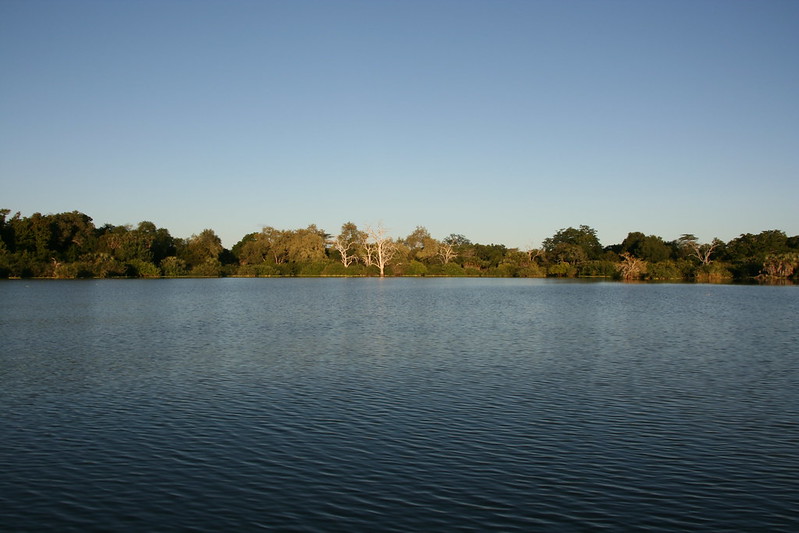
Most first-time visitors do the short two-hour version and leave wondering what lay further upriver. The full-day boat safari answers that. Instead of turning the boat around after the first stretch of hippo pools, you keep going, past the palm-fringed channels and into the chain of lakes that feed off the Rufiji. More water, more time, more of the park you would otherwise never see from a game-drive vehicle. This page walks through what the day actually looks like, how it differs from the standard cruise, what you can hope to spot, and when to come.
See our full range of Tanzania safaris for more ways to explore the country.
What a Full-Day Boat Safari on the Rufiji Covers
The full-day Rufiji boat safari is built around distance and time on the water. A flat-bottomed motorised boat carries a small group upriver from the launch point near camp, following the main channel before branching into the quieter backwaters and lagoons that most short trips never reach. Where the two-hour cruise stays close to the busy hippo stretches, the full day pushes deep into the park’s northern lake network.
You leave after breakfast, usually mid-morning once the light has softened the glare off the water, and you are out until the afternoon. The pace is unhurried by design. Your guide reads the banks as you go, cutting the engine where a herd has come down to drink or where a crocodile lies half-submerged on a sandbar. Because a boat sits low and quiet, animals along the water’s edge tend to stay put rather than bolt, so you often get closer than a vehicle would allow.
Bring a hat, high-factor sun cream and a light long-sleeved layer. There is little shade on an open boat and the reflected glare off the river adds up over a full day. A dry bag for cameras is worth packing too, since spray happens when the wind picks up across the lakes.
How the Full-Day Boat Safari Differs From the Standard Rufiji Cruise
The short version and the full day are not the same trip stretched to different lengths. They cover different water. A standard Rufiji cruise runs roughly two to three hours, sticks to the main river, and finishes with a cold drink on a sandbank at sunset. It is a fine first taste. The full-day boat safari adds the lakes, the bush lunch, and hours of extra drifting time that change what you are likely to see.
Standard boat cruise
Two to three hours on the main Rufiji channel. Focuses on the closest hippo pools and crocodile banks. Ends with a sundowner drink on a sandbank. Good for a first afternoon or a tight schedule.
Full-day boat safari
Most of the day on the water, reaching the lakes upriver. Bush lunch on a sandbank or shaded bank. More varied wildlife along quieter shores, a slow drift back, and sunset on a sandbank if time allows.
With more time comes a better chance of the sightings people hope for but rarely get on a rushed trip. Giraffe drinking at the shallows, buffalo herds strung along a floodplain, the odd elephant wading across a channel. None of it is promised. What the extra hours buy you is more shoreline covered and more chances for something to be there when you pass.
Deep Into the Lake System on a Rufiji Boat Safari
The heart of the full-day boat safari is the lake system that branches off the Rufiji through the park’s northern section. The principal lakes, Manze, Tagalala, Siwandu and Nzerakera, form a chain of shallow, productive water fringed by borassus and doum palms. As the dry season pulls the river back, these permanent lakes and oxbows hold onto their water and pull wildlife in from the surrounding bush.
Each lake has its own character. Some are open and wide, good for scanning the far shore with binoculars. Others narrow into reedy channels where the boat threads slowly and you scan the margins for movement. This is where a full day earns its keep. The short cruise simply does not have the hours to get here and back. Your guide picks the route based on water levels that week, since the lakes rise and fall through the year and some become too shallow to enter late in the dry months.
The lakes are where the boat safari stops feeling like a river trip and starts feeling like you have slipped into a part of the park almost no one reaches by road.
Wildlife You Can Spot on a Rufiji Boat Safari
Water draws animals, and a Rufiji boat safari puts you at their level. Hippos are the constant. Pods of them wallow through the channels in their dozens, grunting and jostling, and you learn quickly to give them room. Crocodiles line the sandbanks, some of them very large, basking with jaws open to cool down. These two you can count on almost any time of year.
Beyond the water itself, the banks bring the rest. It is common to see giraffe, impala, waterbuck, greater kudu and warthog coming down to drink, especially through the dry season when the river is one of the few reliable water sources left. Buffalo gather on the floodplains in herds that can number several hundred. Elephants are the prize, sometimes bathing or crossing a channel, though sightings are never guaranteed and depend heavily on luck and timing. Sable antelope and zebra turn up on the plains near some of the lakes.
Reliable sightings
Hippos in large pods and crocodiles on the sandbanks feature on almost every cruise, dry season or wet. The river holds both in strong numbers year round.
Common along the banks
Giraffe, impala, waterbuck, kudu and warthog come down to drink, most often through the dry months when other water has gone.
Lucky finds
Elephants bathing or crossing, big buffalo herds on the floodplains, and sable antelope near the lakes. Worth hoping for, never promised.
Birdwatching on a Full-Day Rufiji Boat Safari
For anyone who likes birds, a full-day boat safari on the Rufiji is one of the strongest water-based birding trips in southern Tanzania. The extra hours and the range of habitats, open river, reedy lake margins, sandbanks and mud, add up to a long list without much effort. The African fish eagle is the sound of the place, its call carrying across the water long before you see the bird itself perched over a channel.
Along the sandbanks and cut banks you can look for the African skimmer, white-fronted and carmine bee-eaters, Goliath heron, ibises, palm-nut vultures and the small, bright malachite kingfisher. Carmine bee-eaters nest in colonies dug into vertical earth banks, flying in and out in a constant stream when they are breeding. Boehm’s bee-eater is another the guides watch for. Water levels shape the birding too, since exposed sandbanks in the drier months give skimmers and waders the bare ground they need.
The Sandbank Bush Lunch on Your Boat Safari
Midday on a full-day boat safari means lunch out on the river rather than back at camp. Your guide noses the boat onto a sandbank or up to a shaded bank near one of the lakes, and the crew sets out a bush lunch with a cold drink. You stretch your legs, eat in the open with the water in front of you, and let the hottest part of the day pass at an easy pace.
It is a simple thing that changes the whole rhythm of the day. Rather than racing to fit everything into a short window, you have the afternoon to drift back slowly, stopping wherever something catches the eye. If the timing works out, the day finishes with a sundowner on a sandbank as the light drops, which is the same close the short cruise offers but earned after a far fuller day on the water.
Best Season for a Full-Day Boat Safari in Nyerere
The dry season, broadly June to October, is the standard answer for a Rufiji boat safari, and it holds up well for the full-day trip. As the land dries out, animals concentrate along the river and around the permanent lakes, so the banks get busier and sightings come more easily. The catch is water depth. Early in the dry season the lakes are still full and boating is at its best, but by September and October some lakes drop too low to enter, which can shorten the lake portion of the day.
June to August
The sweet spot for a full-day boat safari. Water levels stay high enough for the lakes while the drying land pulls wildlife towards the river. Comfortable, clear conditions.
September to October
Peak dry season with excellent bank sightings, though some lakes may be too shallow to reach. Boating can be limited to the main channels late in this window.
November to May
The green, wetter months. Hot and humid with heavy rain possible. Lakes and river run high, birding is strong, and many camps close for part of this period.
There is a quieter case for the green months too. From roughly late June the park has come through the long rains with full lakes and easy boating, and even in the wetter stretch the birding is excellent as migrants arrive. Mid-January to mid-March brings a drier break within the green season that suits both boating and birds. If your heart is set on the deep lake exploration, aim for the earlier dry months when the water is there to carry you.
Which Camps Run the Full-Day Boat Safari
The full-day boat safari is run out of the camps and lodges clustered along the northern Rufiji and its lakes, where the boats launch. Well-known options in this stretch include Siwandu on Lake Nzerakera, Selous Impala Camp, and the various riverside camps around the Mtemere and Lake Manze areas. Some camps keep their own boats, while at other launch points the boats line up along a shared sandbank and are booked through the camp or a tour operator.
If the full day matters to you, say so when you book, because not every camp packages it as standard and some sell only the shorter cruise unless asked. Fly-in day trips that include the full-day boat safari also run from Dar es Salaam and Zanzibar, landing at Mtemere airstrip or a nearby strip, so you do not have to overnight in the park to do one. That said, a longer stay gives you the flexibility to pick a day when the water and weather line up.
Getting to Nyerere for Your Boat Safari
Handpicked Nyerere safari packages
Reaching Nyerere for a boat safari is easiest by air. Light aircraft connect Dar es Salaam, Zanzibar and Arusha to airstrips inside the park, and the hop from Zanzibar or Dar takes roughly 45 minutes to an hour to strips such as Mtemere. From there a camp vehicle meets you for the short transfer to the river. It is quick enough that a fly-in day trip built around the boat safari is realistic, though most people fold it into a two or three-day stay with game drives and a walking safari as well.
Driving in from Dar es Salaam is possible and cheaper, but it is a long road transfer of several hours over rough sections, so it suits travellers with time to spare rather than those coming for a single day on the water. Whichever way you arrive, the boat safari itself is arranged through your camp or operator, and booking the full-day option ahead means the bush lunch and boat are set aside for your group.
Full-Day Boat Safari FAQ
How much does a full-day boat safari in Nyerere cost?
A full-day fly-in boat safari from Dar es Salaam or Zanzibar, taking in park fees, a boat safari, a game drive and a bush lunch, tends to run around 860 US dollars per person as a package. If you are already staying at a camp inside the park, the boat activity itself is far cheaper and is often built into the daily rate or added as a set activity fee. Prices vary by camp, group size and how much flying is involved, so confirm the current rate with your operator when you book.
How long is a full-day boat safari on the Rufiji?
The name is loose. You are usually out from mid-morning until the afternoon, with a bush lunch stop in the middle, so figure on the better part of a day on and around the water. That is the whole point of the format compared with the standard two to three-hour cruise, which stays on the main channel and returns much sooner.
What is the difference between the full-day and the short boat safari?
The short cruise runs two to three hours on the main Rufiji channel and ends with a sundowner drink on a sandbank. The full-day version reaches the lake system upriver, includes a bush lunch on a sandbank or shaded bank, and gives you far more time to drift quietly and look for wildlife along less-visited shores. The full day sees more of the park and more varied animals, though nothing on the water is ever guaranteed.
What animals will I see on the boat safari?
Hippos and crocodiles are near certain on any Rufiji boat safari. Along the banks it is common to see giraffe, impala, waterbuck, kudu and warthog coming to drink, most reliably in the dry season. Elephants bathing or crossing, large buffalo herds and sable antelope are possible with luck. Birdlife is excellent throughout, with fish eagles, skimmers, bee-eaters, herons and kingfishers regularly along the water.
When is the best time for a full-day boat safari?
June to August is the strongest window, when the lakes still hold enough water for boating and the drying land pulls wildlife towards the river. September and October bring superb bank sightings but shrinking lakes that can limit the lake portion of the day. The green months from November to May run high water and strong birding, with a drier break from mid-January to mid-March, though some camps close for part of the wet season.
Can I do a full-day boat safari as a day trip from Zanzibar?
Yes. Light aircraft link Zanzibar and Dar es Salaam to airstrips inside Nyerere in about 45 minutes to an hour, and operators sell fly-in day packages that include the boat safari and a bush lunch. It makes for a long but doable single day. Staying at least one night in the park gives you more flexibility to choose a day when the water and weather suit the full lake route.