
Nyerere weather stays warm to hot across the whole safari year, with a dry season from June to October and a wet season from November to May that breaks into short rains and long rains. The driest, best months for a Nyerere safari run from late June through October, when thinning bush and shrinking water pull wildlife toward the Rufiji River. Nyerere National Park sits in southern Tanzania, the former northern Selous Game Reserve, and is built for boat and walking safaris.
Plenty of people planning a first trip here get stuck on timing, and it is a fair worry. The park is huge, the seasons swing hard between bone dry and soaking wet, and a few camps shut their doors for part of the year. Get the month right and the safari more or less runs itself. Get it wrong and you can land in a week of rain with the animals scattered. The good news is that the pattern is steady enough to plan around, so this guide walks through it month by month.
For routes, pricing and fresh ideas, browse our Tanzania trips.
Nyerere Weather Patterns Across the Safari Year
Being close to the equator, Nyerere keeps temperatures fairly level. Daytime highs sit around 29 to 31 degrees Celsius through the cooler dry months and climb toward 33 to 35 in the hottest stretch late in the year. Nights are milder, dropping to about 18 degrees in the dry season and staying warmer, near 21 to 23, when the rains are around. Annual rainfall lands near 787 millimetres, most of it packed into a handful of wet months.
The rain here is bimodal, which is the single most useful thing to understand about the weather. Short rains arrive in November and December. A partial dry spell follows in January and February. Then the long rains build from March and peak before easing in May. July is the driest month with barely any rain at all, while March is the wettest by a wide margin. Everything else about a safari here, the game drives, the boat trips, the walking, hangs off that calendar.
Dry Season Safaris from June to October
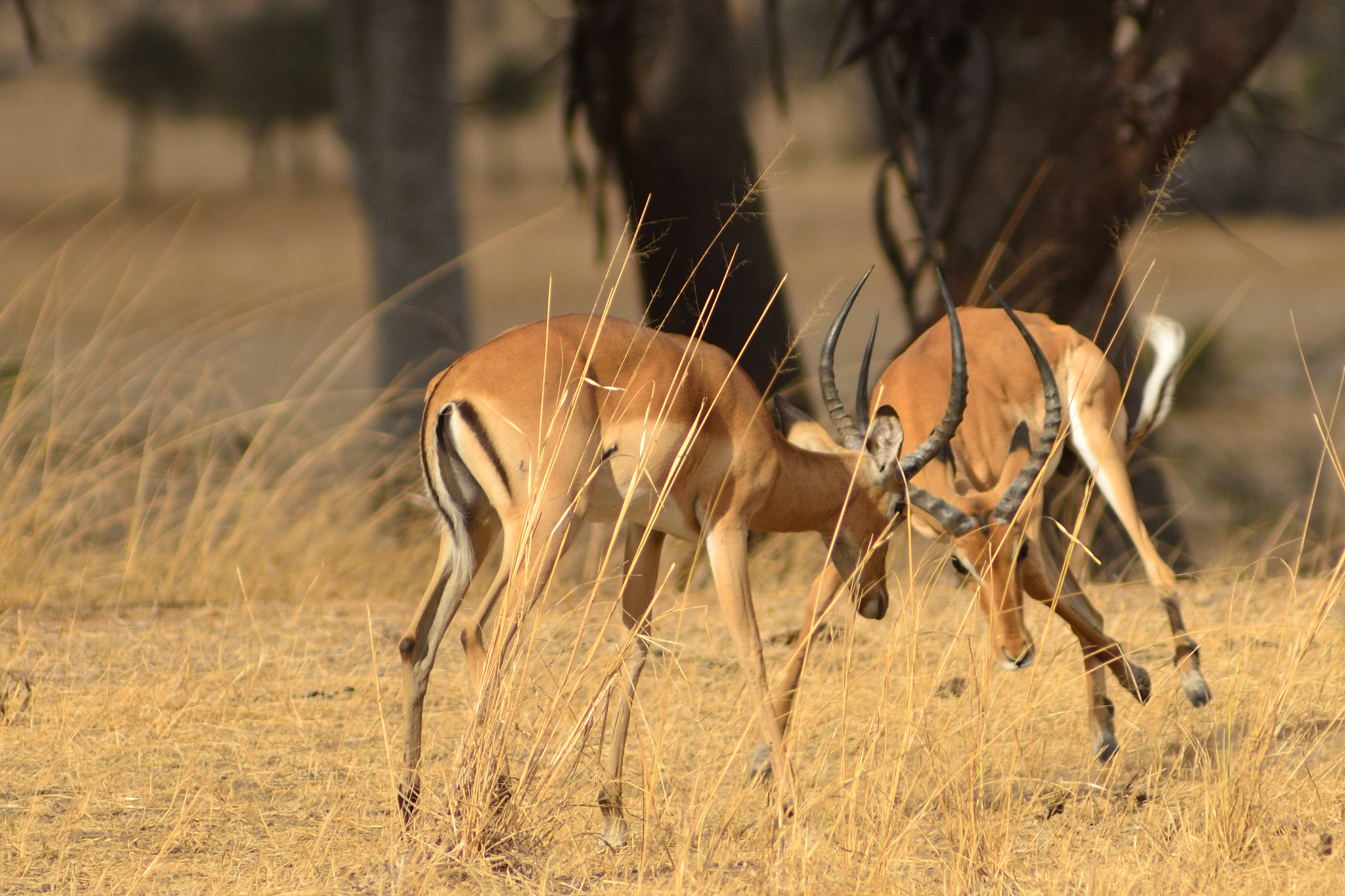
The dry season safari window, June to October, is the heart of the year for game viewing. It hardly rains, skies stay clear, and the bush thins out until spotting wildlife becomes far easier than in the green months. As standing water dries up, thirsty herds of impala, wildebeest and buffalo drift toward the Rufiji and its lakes, trailed by lions, hyenas, leopards and the park’s famous wild dogs. Sightings are never a promise, yet the odds tilt sharply in your favour now.
Daytime temperatures through these months are pleasant rather than punishing, usually around 29 degrees, with cool mornings that can nip on an open game drive vehicle. A light layer for the early start earns its place in your bag. Mosquito numbers also fall in the dry months, and the lower humidity makes long hours in the vehicle more comfortable. The trade off is dust and, in peak months, more vehicles at the best sightings.
June Weather and Rufiji Boat Safaris
June opens the good season. The long rains have cleared, the air feels fresh, and the land is still green from the wet months without the mud that comes with them. Days are warm and comfortable, nights cool. For a Rufiji boat safari, June is arguably the sweet spot of the whole year. Water levels are high after the rains, so boats can push off the main channel into side creeks and lagoons that game drives never reach.
On the water you can expect large pods of hippo, sometimes 30 to 50 together, and big crocodiles hauled out on the sandbars. River birds are active too, with fish eagles, skimmers and yellow billed storks working the banks. Game drives this month are productive without the dust that builds later, which makes June a strong, slightly quieter choice before the peak crowds arrive.
July Weather: Peak Dry Season Game Drives
July marks the start of the high season and, for many, the best all round month for dry season game drives. It is the driest month of the year, with next to no rain and clear, sunny skies. Regular water sources keep shrinking, so the lakes and river channels grow busier by the week as animals come to drink. The bush is thinning fast, which opens up long sightlines across the floodplains.
Daytime temperatures hover near 29 to 31 degrees, warm but rarely oppressive, and the low humidity keeps things comfortable through a full day out. Mornings and early evenings can feel cool, so the layer you shed by mid morning goes back on for the sundowner. Walking safaris run well now, and the combination of game drives, boat trips and walks makes July a flexible month to build a varied safari around.
August Safari Weather and Wildlife at the Water
August carries July’s momentum. The weather holds warm, dry and sunny, and the park keeps drying out. By now the seasonal pans and smaller waterholes are mostly gone, which concentrates wildlife around the Rufiji and the permanent lakes even more tightly. That concentration is what makes an August safari so rewarding, since the animals come to you rather than spreading thin across a green landscape.
Expect elephant and buffalo down at the water through the heat of the day, with predators shadowing the herds. Boat safaris still run well, though water levels have dropped from the June high, so guides pick their channels with more care. Nights stay comfortable, and daytime heat builds gently through the month as the park moves toward its hottest weeks. Dust is now a real feature of the drive, so pack a scarf or buff for your face and camera.
September Weather and Big Herd Game Viewing Safaris
September is one of the standout months for game viewing safaris in Nyerere. The dry season is well established, vegetation is at its sparsest, and large herds gather at the remaining water. Days grow warmer, with highs pushing toward 33 degrees, and the light turns hard and bright. This is prime time for watching predators work the crowded waterholes, and for the sheer numbers of plains game drawn to the river.
The heat asks a little more of you now. Midday can feel heavy, so most safaris shift to early morning and late afternoon drives, resting through the hottest hours back at camp. Boat safaris continue, though channels run shallower and routes get shorter as the water keeps falling. For photographers, the clear skies and thin bush make September hard to beat.
October Weather: The Hot End of the Dry Season Safari
October is the hottest, driest peak of the dry season safari, and it splits opinion. Game viewing can be superb, with animals packed around the last water and long lines of elephant coming to drink. Highs climb toward 33 to 34 degrees, the land is parched and dusty, and the first hints of the coming rains sometimes show as building cloud late in the month.
Water levels are now at their lowest, which changes the boat picture. Some channels run too shallow to navigate, so boating narrows to the main Rufiji or drops off altogether at certain camps. Land drives more than make up for it, since the crowded waterholes deliver excellent sightings. If you want the most intense concentrations of game and you can handle real heat, October rewards you. Just go in expecting dust and warmth rather than gentle mornings.
Short Rains in November and December on Safari
The short rains arrive in November, usually as brief afternoon showers or a passing thunderstorm rather than all day rain. The effect on a November safari is mostly welcome. The dust settles, the land turns green again, and the heat of October eases a touch even as highs stay warm near 33 to 35 degrees. Migratory birds start arriving, so birding steps up noticeably from here.
December continues in a similar vein, green and warm with occasional showers that rarely derail a day’s plans. These months sit in shoulder season, which means lower prices, fewer other travellers and better availability. Game viewing is a little harder than in the dry peak because water is no longer scarce and animals spread out, yet the scenery is at its most photogenic and the river remains full for good boat safaris. For a first safari on a tighter budget, November and December are a smart, quieter pick.
January and February: The Green Season Safari
After the short rains, January and February bring a partial drying out that locals call the green season. Days are hot and largely sunny, near 31 to 33 degrees, broken by the occasional afternoon shower. The park stays green and dotted with seasonal wildflowers, and the birding is excellent, best enjoyed from a boat along the full flowing Rufiji. A green season safari here trades the easy dry season sightings for scenery, birds and space.
Game viewing is more challenging in these months, since the animals no longer have to crowd the river and the tall grass hides them well. That said, the park feels quiet and prices stay soft. Walking safaris typically run until around mid January, after which they depend on a safety assessment as conditions get wetter, so confirm this with your camp if a walking trip matters to you. For birders and photographers who prize a green backdrop, this window has real appeal.
Long Rains from March to May and Camp Closures
The long rains define the low season. March is the wettest month by far, near 165 millimetres, with April close behind, and rain can fall on most days, sometimes for long spells rather than a quick afternoon burst. Roads within the park turn to mud and often become impassable, airstrips can flood so planes cannot land, and wildlife moves away from the swollen river into the bush. A wet season safari in this stretch is genuinely difficult.
Because of all this, many camps and lodges close from around the end of March through May for maintenance and refurbishment, reopening in June. If you are set on visiting, May is the safest bet within this window, as the rains begin to ease and a few camps stay open at low season rates. Humidity is high and mosquitoes are more active now, so come prepared. For most travellers, though, the long rains are the months to avoid unless budget is the overriding factor.
Humidity, Heat and What to Pack for a Nyerere Safari
Humidity tracks the rain. Through the dry season the air feels drier and more comfortable, part of why June to October is so easy going despite the warm days. From the short rains onward the humidity builds, peaking around the long rains when the combination of heat and moisture feels heavy. Planning your Nyerere safari around that pattern keeps the days pleasant rather than sticky.
For clothing, think light and neutral coloured for the daytime heat, plus a warm layer for cool dry season mornings and evenings on open vehicles. A wide brimmed hat, sunglasses and strong sun protection matter in every month, since the equatorial sun is fierce even under light cloud. Bring insect repellent year round and treat it as non negotiable in the wet months. A scarf or buff handles the dust of September and October, and a light rain layer is worth carrying if you travel in the shoulder or green months when a shower can pass through.
Getting to Nyerere for Your Safari
Handpicked Nyerere safari packages
Most visitors reach Nyerere by a short scheduled flight from Dar es Salaam, roughly 45 minutes to one of the park’s several airstrips, which is the quickest and most reliable route in every season. Light aircraft transfers matter most in the wet months, when road access from Dar, a long drive of several hours, can turn slow or impassable on flooded ground. During the long rains, remember that even flights can be grounded when airstrips are waterlogged, another reason those months suit few travellers.
From the airstrip, camps run their own transfers, often turning the drive to camp into a first game drive. Whichever month you choose, building in a little flexibility around flight timings pays off, since afternoon storms in the green and shoulder seasons can shift a schedule by an hour or two.
Nyerere Safari Weather and Timing FAQ
What is the best month to visit Nyerere for a safari?
For game viewing, aim for the dry months of July through October, when the bush is thin and animals gather at the water. September and October bring the biggest concentrations at the shrinking waterholes, while June and July give you excellent conditions with slightly fewer vehicles. If birding and green scenery matter more to you than easy sightings, November through April is worth considering.
When is the wet season and should I avoid it?
The wet season runs November to May, split into short rains in November and December and long rains from March to May. The short rains rarely spoil a safari and come with green scenery and good birding. The long rains, especially mid March to mid May, are the stretch to avoid for a classic game viewing safari, since roads flood, wildlife scatters and many camps close.
How much does it cost to visit Nyerere National Park?
Park entry for non resident adults is commonly quoted between about 50 and 82 US dollars per person for 24 hours, with children paying less, so confirm the current rate with your operator as figures vary by source and change over time. Camps inside the park also carry a concession fee of roughly 70 US dollars per person per night. Boat safaris typically run around 24 to 40 US dollars per person. A full guided safari with flights, camp and activities sits well above these individual fees.
Can I do a Rufiji boat safari all year round?
Boat safaris are a signature of Nyerere and run through much of the year, but water levels drive what is possible. June offers the highest water and the widest choice of channels and lagoons. As the dry season goes on, levels drop, and by October some channels are too shallow to navigate, so boating narrows to the main Rufiji or pauses at certain camps. The green and short rain months keep the river full again.
When can I do a walking safari in Nyerere?
Walking safaris generally run from the start of June to around mid January, weather permitting. After mid January, as the wetter months set in, walking depends on a safety assessment and cannot be guaranteed. The dry season from June to October is the most reliable window for walking, with firm ground, thin bush and comfortable temperatures.
How hot does Nyerere get and is the heat a problem?
Daytime highs sit near 29 to 31 degrees Celsius in the cooler dry months and climb toward 33 to 35 in the hottest weeks around October and November. Dry season mornings can feel cool on an open vehicle, so a warm layer helps. The peak heat late in the year is manageable if you follow the usual rhythm of early and late drives with a rest through the middle of the day.