
Picnic sites on a Nyerere safari are mostly informal riverside and lakeside stops, not fixed roadside benches, with the best known being the sandbars of Stiegler’s Gorge, the palm shade at Lake Tagalala, and the nearby hot springs. Bush breakfasts and picnic lunches get arranged by your camp and set up by guides who read the day and pick the spot. Nyerere National Park, the former Selous Game Reserve in southern Tanzania, sits around the Rufiji River.
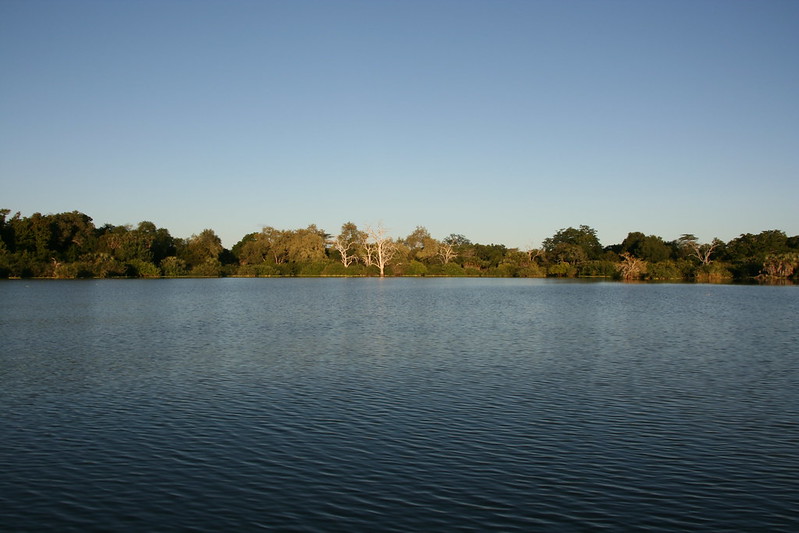
If you are picturing a car park with a shelter and a bin, park that idea now. A Nyerere safari handles meals in the bush differently from the busier northern parks. There are a handful of loosely recognised spots where guides like to pull up, but most of the good ones are chosen on the morning, based on where the animals are, how high the river is running, and where a bit of shade sits at the right hour. The whole thing leans on your camp and guide rather than park infrastructure, which is worth knowing before you book.
How Picnic Stops Work on a Nyerere Safari
On most southern Tanzania safaris, the picnic is folded into a longer activity rather than treated as a separate outing. A full-day game drive carries a packed lunch. A boat safari might break at a sandbar. A walking safari usually finishes with breakfast laid out on a groundsheet by the water. The guide, not a signpost, decides where you eat.
That flexibility is the point. Guides in Nyerere know a rotation of reliable spots, a shaded riverbank here, a rise with a view there, and they weigh them against the day’s conditions. Water level matters a lot. So does wind, since a breezy sandbar keeps the tsetse flies down. You will often not know where lunch is happening until the vehicle or boat slows and someone starts unpacking a cool box.
Tell your camp in advance about any dietary needs. Because bush meals are prepped in the camp kitchen and carried out, there is no roadside kiosk to fall back on. Vegetarian, halal, and allergy requests are all normal, but the kitchen needs the heads-up the night before.
Bush Breakfast Stops on Nyerere Walking Safaris
The classic Nyerere picnic is the bush breakfast at the end of a walking safari. You set off before dawn on foot with a guide and an armed ranger, follow tracks and birdsong for a couple of hours, then stop somewhere near the water while the day warms up. Coffee, fruit, something cooked if the camp runs to it, all carried in and laid out on a simple cloth.
These riverside breakfast spots are not fixed sites with names. The guide picks a bank with a clear view and a safe approach, often facing the Rufiji or one of the lakes so you can watch hippos while you eat. It is a quiet, low-key affair, and for a lot of guests it ends up being the meal they remember most from the trip. Sightings during the walk itself are never guaranteed, but the payoff is the pace and the closeness to the ground rather than a big-game tick list.
The best picnic in Nyerere is rarely the one with a view of a lion. It is the one where you can hear the river and nobody is in a hurry to move.
Stiegler’s Gorge Picnic Breakfast on a Boat Safari
For a named, sought-after spot, Stiegler’s Gorge is the one. A full-day boat safari runs up the Rufiji to where the river narrows between canyon walls that rise well over a hundred metres, and guides look for a sandbar to pull the boat onto for a picnic breakfast on the rocks. Eating on a sandbar in the middle of the river, with the water moving past on both sides, is about as memorable as bush meals get in this park.
The gorge trip is usually sold as a half-day or full-day outing by the camps closer to that stretch of river. It combines the boat safari with the meal stop, so you are paying for the whole experience rather than a picnic in isolation. Water level again decides a lot. Earlier in the dry season the river runs high and strong, and the sandbars shift, so the exact spot changes from week to week.
Lake Tagalala Picnic Sites and the Hot Springs Tour
Around Lake Tagalala you get two of the park’s better picnic settings close together. The lakeshore itself gives you palm shade to sit under while crocodiles and hippos do their thing offshore, and it is a common lunch stop on boat safaris that work the southern lakes. Bring binoculars, because the birdlife along that water is heavy in the dry months.
A short way off sit the Maji Moto hot springs, fed by geothermal water and ringed by palms. Some tours build a stop here into a longer boat safari or game drive, letting guests dip their feet or take a quick soak in the warm pools before the picnic lunch comes out. It is one of the few spots in Nyerere where getting out and moving around away from the vehicle is part of the plan, always with the guide setting the boundaries.
Stiegler’s Gorge sandbar. Mid-river picnic breakfast on a boat safari, canyon walls on both sides. Best earlier in the dry season when the river is full.
Lake Tagalala shore. Palm-shaded lakeside lunch stop with crocodiles, hippos, and strong birding. Paired often with the hot springs.
Maji Moto hot springs. Warm geothermal pools among palms, a rare leave-the-vehicle stop, usually tied to a picnic lunch.
Rufiji riverbanks. Roaming bush breakfast and sundowner spots chosen daily by guides, no fixed site, best views over the water.
Bush Lunch Picnic Sites on Full-Day Game Drives
When the weather is cool enough, camps run full-day game drives with a packed picnic lunch so you can push deeper into the park without doubling back for the middle of the day. The lunch stop is chosen by the guide, usually a shaded spot with a bit of a view and no obvious predator sign, where everyone can safely stretch their legs beside the vehicle.
These are not marked picnic areas in the way you find further north. The guide reads the ground, parks up, and sets out lunch on the bonnet or a folding table. You stay close to the vehicle, keep the noise down, and follow whatever the guide says about how far you can wander. Full-day drives also work well in the cooler stretch of the year when a single long outing beats two short ones broken by a hot afternoon back at camp.
Ask your camp whether a full-day drive with a picnic lunch is offered before you arrive. Not every property runs them, and the ones near Mtemere Gate that reach the better game areas often need the early start and the packed lunch to make the distance worthwhile.
Sundowner Stops Along the Rufiji River Safari
The other end of the day has its own ritual. A sundowner stop on a Nyerere safari usually means pulling up on the Rufiji riverbank in the late afternoon, drink in hand, while the light drops and the hippos start grunting. Some camps set this up right in front of the property, others run a short boat or drive out to a chosen bank.
Like the breakfast spots, these are guide’s-choice locations rather than fixed picnic sites. What you get is a table, a few chairs, cold drinks, and a stretch of river to watch the sun go behind. It is low effort for the guest and high on atmosphere, and it slots naturally onto the back of an afternoon boat safari or game drive rather than being a trip in its own right.
Riverside Rest Spots Near Mtemere and Matambwe Gates
Where you enter shapes which picnic and rest spots you reach easily. Nyerere has two main road gates, and the camps cluster around each one, so the practical rest stops differ depending on your base for the safari.
Mtemere Gate. On the eastern side, reached on the main road from Kibiti, and the busier of the two. Camps near here include Rufiji River Camp, Selous Impala, Sand Rivers, Serena Mivumo, Siwandu, Roho ya Selous, and Lake Manze. This side puts you close to the Rufiji channels and the lake system where most boat picnics and sundowners happen.
Matambwe Gate. On the northwestern corner near Kisaki and the Matambwe airstrip. Camps here include Sable Mountain, Beho Beho, The Retreat, and Steigler’s Gorge Camp. This side sits closer to the gorge country and works well if a Stiegler’s Gorge picnic breakfast is high on your list.
Both gates open around six in the morning and close at six in the evening, so any picnic outing runs inside that window. The gate you use is usually decided by whether you fly in to a nearby airstrip or drive from the coast, and your camp books accordingly. Either way, the meal stops themselves happen out in the park rather than at the gate.
Rules About Leaving the Vehicle on a Nyerere Safari
This is the part first-timers worry about, and fairly so. On a normal game drive you stay in the vehicle. You do not get out to take photos, and you do not wander off for a better angle. The exceptions are the picnic stops, where the guide picks a safe spot and gives you the boundaries, and the walking safaris, which run under strict rules.
A walking safari carries an armed ranger whose job is your safety, and the group is kept small, generally no more than six guests. You walk in single file, keep quiet, and do exactly what the ranger says. A briefing before every walk is standard and not optional. Routes tend to avoid the heavier predator country and lean toward plains game like zebra, giraffe, and elephant seen at a distance. The rules can feel formal, but they are what makes eating breakfast on foot by a hippo-filled river a sensible thing to do.
The picnic feels relaxed because the planning around it is not. Rangers, briefings, and a guide reading the ground are what buy you that calm hour by the water.
Best Time for a Nyerere Picnic Safari
Timing changes what the picnic spots look like and which ones you can even reach. The dry season, roughly June to October, is the main window for a Nyerere safari. Animals pull in toward the Rufiji and the lakes, roads stay firm, and the classic riverside picnic settings are at their best.
June to August. High water in the river makes for the strongest boat safaris and the best Stiegler’s Gorge sandbar picnics. Cooler mornings suit walking safaris and their bush breakfasts.
September to October. Prime game viewing as water shrinks and wildlife concentrates. Boating gets trickier late in this stretch as lake levels drop, so gorge and lake picnics can be affected.
January to March. A second dry-ish window with fine birding and good boating. Green surroundings and fewer vehicles, though some camps close in the long rains that follow.
If a boat picnic at the gorge or on Lake Tagalala is your priority, aim for the earlier dry months when the water is high enough to run the boats properly. Later in the season the game viewing peaks but the water-based picnic options narrow.
Getting to Nyerere for Your Safari
Handpicked Nyerere safari packages
Most guests reach the park one of two ways. You can fly in from Dar es Salaam, Zanzibar, or Arusha to one of the airstrips such as Mtemere, Siwandu, Beho Beho, or Matambwe, which is quick and drops you near your camp and its picnic country. Or you drive from the coast through Kibiti toward Mtemere Gate, a road trip that commonly runs around six hours.
The fly-in option is popular precisely because it leaves more of the day for activities, and a camp transfer usually rolls straight into a first boat safari or game drive with a meal built in. Whichever way you come, the camp arranges the picnics, the ranger for any walk, and the timing around the gate hours, so the logistics of eating in the bush are handled for you rather than something you sort out on arrival.
Nyerere Safari Picnic Sites FAQ
Are there fixed picnic sites in Nyerere National Park?
Not really, not in the marked-car-park sense you find in some northern parks. There are recognised areas guides favour, the Stiegler’s Gorge sandbars, Lake Tagalala’s shore, the hot springs, and stretches of the Rufiji bank, but the exact spot is chosen on the day by your guide based on water level, shade, and where the animals are. Bush breakfasts, picnic lunches, and sundowners are all arranged by your camp.
Can I get out of the vehicle for a picnic on a game drive?
Only at a spot the guide chooses and clears first. On a standard game drive you stay in the vehicle, and the picnic stop is the exception, where the guide parks somewhere safe, gives you the boundaries, and keeps everyone close. Walking safaris are the other time you are on foot, and those run with an armed ranger, a small group, and a compulsory briefing.
What does a walking safari with a bush breakfast cost?
Fees sit on top of park entry and are usually built into your camp package. As a guide, a walking safari runs in the region of twenty-four US dollars per person plus a similar amount for the armed ranger, and boat safaris fall roughly between twenty-four and forty dollars per person. The bush breakfast itself is normally included by the camp rather than charged separately.
How much is entry to Nyerere National Park?
Non-resident adult entry is commonly quoted from around fifty US dollars per person for a twenty-four hour period, with some operators listing higher figures closer to eighty, and children charged less. Rates vary by residency and source, so confirm the current fee with your operator. Note that gates no longer take cash, and payment runs through a government electronic control number your tour operator arranges.
Is the Stiegler’s Gorge picnic breakfast worth it?
For many guests it is the highlight, since eating on a sandbar mid-river with canyon walls above you is hard to match elsewhere in the park. It works best earlier in the dry season when the Rufiji is high enough to run the boats well. Book it through a camp on the gorge side of the park, or check that your camp offers the full-day boat outing that includes it.
Do I need to book picnic meals in advance?
The camp handles it, but flag any dietary needs before you arrive. Bush meals are cooked in the camp kitchen and carried out, so there is no shop to top up from once you are in the park. Vegetarian, halal, and allergy requests are all standard as long as the kitchen knows the night before.