
For a first safari, Kenya suits travellers who want denser big-cat sightings, easier access and lower entry costs, while Tanzania rewards those chasing open wilderness, huge herds and quieter parks. Both share the same wildebeest migration and the same Big Five, split by a border that runs through one ecosystem. The Masai Mara safari is compact and close to Nairobi; the Serengeti safari is vast and remote. Your answer depends on budget, crowds and whether you plan to add a beach.
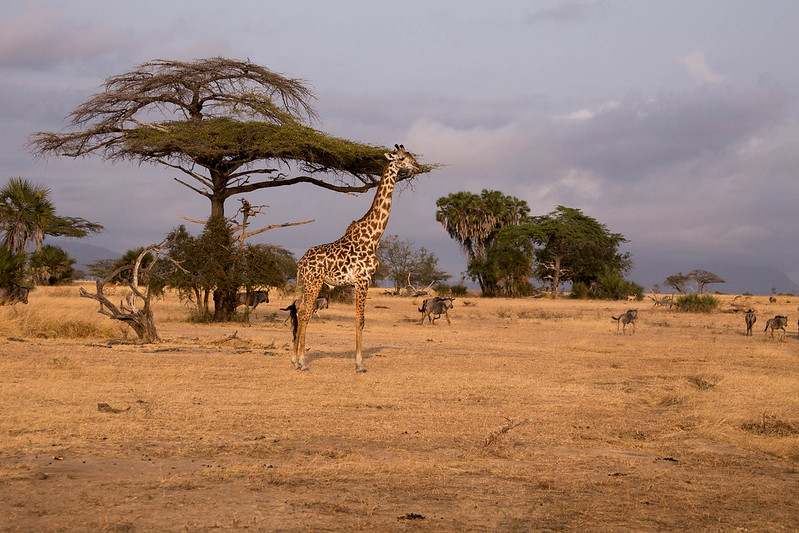
The two countries get compared endlessly because they are, in wildlife terms, next-door neighbours sharing one story. The Mara-Serengeti ecosystem straddles the line, so the animals do not know which passport control they belong to. What changes is the human side: how you get in, what you pay at the gate, how many other vehicles pull up at the same lion, and what you can bolt onto the trip once the game drives end. This comparison walks through each of those, park by park, so you can match the trip to the kind of traveller you actually are.
Masai Mara Safari Versus Serengeti Safari for Big Cats and Wilderness
Start with the headline matchup, because most people booking a first trip are really choosing between these two reserves. Kenya’s Masai Mara covers roughly 1,510 square kilometres. Tanzania’s Serengeti National Park spreads across about 14,750 square kilometres, nearly ten times larger. That size gap shapes everything.
The Mara is small and busy with life. Because the wildlife concentrates in a tighter space, animal densities feel higher, and the reserve has built a reputation for big cats. Lion prides are large and used to vehicles. Cheetah sit up on termite mounds. Leopard turn up along the Talek riverine bush. You are rarely far from a sighting, though in peak months you may share it with a line of other trucks.
The Serengeti trades that concentration for scale and space. Herds stretch to the horizon on the southern plains, and the sense of being somewhere genuinely wild is stronger, especially away from the central Seronera area. Cats are here in good numbers too, yet you often work a little harder for them across the bigger distances. A Serengeti safari feels expansive; a Mara safari feels intimate. Neither is better in the abstract. One offers reliable close action, the other offers room to breathe.
Masai Mara safari, Kenya. Around 1,510 square kilometres. Higher wildlife density in a compact reserve, strong big-cat record, easy to reach from Nairobi. Busier at popular sightings during the dry season. Best for a short trip where you want lots of action fast.
Serengeti safari, Tanzania. Around 14,750 square kilometres. Open, remote plains with a stronger wilderness feel and fewer vehicles in the far reaches. Sightings can take more driving. Best for travellers who value space and solitude over convenience.
The Great Migration Safari in Kenya and Tanzania Through the Year
The Great Migration is not a single event you catch in one country. It is a year-round loop of well over a million wildebeest, plus zebra and antelope, circling the Mara-Serengeti ecosystem after grass and water. Both countries get a turn, so the real question is when you travel, not which side you pick.
For most of the year the herds are in Tanzania. Calving happens on the southern Serengeti plains around January to March, when thousands of wildebeest drop young in a short window and predators gather. Through the middle of the year the columns push north and west across the Serengeti. Then, roughly July to October, they cross into Kenya’s Masai Mara, and that is when the famous Mara River crossings happen, with wildebeest plunging down banks past waiting crocodiles.
August and September give the highest chance of seeing a Mara crossing, though nothing is scheduled and the timing bends with the rains. In October many herds recross the Mara River heading south, and by November the short rains pull them back down toward the Serengeti. So a Kenya trip in September and a Tanzania trip in February can both be built around the migration. They just show you different chapters. Crossings are dramatic but never guaranteed on any given day, so plan a few days in the right area rather than a single-morning gamble.
January to March, southern Serengeti. Calving season on the short-grass plains. Big predator action as the herds concentrate. A Tanzania migration safari at its most stationary and photogenic.
July to October, Masai Mara. River-crossing window in Kenya. Highest crossing odds in August and September. This is the classic Mara migration safari, busy but hard to beat for drama.
November to December, Serengeti. Short rains draw the herds back south. Quieter, greener, and a good value shoulder period for a Tanzania safari.
Amboseli Safari and Kilimanjaro Views Compared With Northern Tanzania
If the picture in your head is elephants walking beneath a snow-capped peak, that shot belongs to Kenya. Amboseli National Park, in southern Kenya near the Tanzanian border, sits directly across from Mount Kilimanjaro. The mountain itself stands in Tanzania, yet the classic view of it looks back from the Kenyan side. Early morning and late afternoon on a clear day give the cleanest sightlines before cloud builds over the summit.
Amboseli is famous for its elephants, among the most studied on earth after decades of continuous research. The herds are large, multi-generational and calm around vehicles, and this is one of the last places to reliably see big-tusker bulls carrying heavy ivory. An Amboseli safari pairs that elephant viewing with lions, cheetah, giraffe, zebra and more than 400 bird species across its marshes and open plains.
Tanzania answers with different mountain scenery. You do not photograph Kilimanjaro from within a Tanzanian park nearly as cleanly, but the northern circuit brings the Ngorongoro Crater, a collapsed caldera holding a dense resident population of wildlife inside its walls, and Tarangire, known for baobabs and elephant herds. For that single elephants-and-mountain frame, Kenya wins. For a varied northern loop of contrasting habitats in one country, Tanzania’s circuit is hard to match.
Zanzibar Beaches Versus the Kenyan Coast After Your Safari
Most people want sand after the dust, and the beach choice often follows the safari choice. Zanzibar pairs naturally with a Tanzania safari, since a short flight links the Serengeti and Arusha to the island. Kenya’s coast, meaning Diani and the beaches near Mombasa, pairs naturally with a Mara or Amboseli trip, reached by an internal flight under an hour from Nairobi with no extra border to cross.
The two coasts have different personalities. Zanzibar leans toward culture and watersports: Stone Town with its Swahili and Arabic history, spice farm tours, diving and snorkelling off the reefs. Diani leans toward quiet relaxation, strong seafood, and doing very little in a lovely spot, with snorkelling, fishing and boat trips available when you want them.
Match the beach to the safari to save a border hop. After a Kenya safari, Diani keeps you visa-simple with one short domestic flight. After a Tanzania safari, Zanzibar is the natural add-on and needs no return through Nairobi. Crossing countries just for the beach adds cost and a second entry process you can usually avoid.
For a first East Africa trip where logistics matter, the Kenyan coast tends to be the practical, high-satisfaction choice. Zanzibar earns its place for travellers who care about diving, Stone Town’s history, or a more adventurous island feel, and for anyone already committed to a northern Tanzania route. Neither is a downgrade. They simply reward slightly different holidays.
Safari Cost Comparison Between Kenya and Tanzania
The old shorthand said Kenya was the cheaper option. That is no longer clean-cut. Kenya raised several park fees, which narrowed the gap and brought the two countries closer on total price. A Kenya safari still tends to offer more budget and mid-range choice thanks to higher tourism volume and stiffer competition among lodges and operators. A Tanzania safari often runs higher because remote parks mean longer transfers, more fuel and pricier logistics.
Park entry is a real chunk of any daily rate, and the two countries structure it differently. The Masai Mara sits under county management rather than the national wildlife service, and it charges more in high season than in the green months. Tanzania’s Serengeti adds a concession element on top of the base park fee, so a night spent inside the park can cost more than the Mara equivalent once everything is totalled. The exact figures live in the FAQ below, where they belong.
One quiet upside of Kenya’s fee rise: peak-season crowding eased at the gates, which can mean better viewing when you do pay. Higher fees are never fun, yet thinner traffic at a sighting has its own value on a photography-focused trip.
Crowds and Access on a Kenya or Tanzania Safari
Access is where Kenya pulls ahead for convenience. Nairobi’s Jomo Kenyatta International Airport has frequent, competitively priced flights, and from there the Mara is a 45-minute charter to one of several airstrips or a five to six hour drive. Tanzania’s main safari gateway, Kilimanjaro International Airport, sees fewer and often costlier connections, and the northern parks sit further from the runway.
Crowds cut the other way. The Mara’s compactness that makes sightings so reliable also concentrates vehicles, and a good leopard in August can draw a crowd. Tanzania’s parks, spread over far larger areas with lower-density infrastructure, feel emptier in their remote sectors, which is exactly what draws travellers wanting solitude. If you want the shortest path to guaranteed action, Kenya. If you want to feel like you have the plains to yourself, Tanzania, particularly away from the central hubs.
Kenya gets you to the wildlife faster and cheaper. Tanzania gives you more room once you arrive. The right pick is the one that matches how you like to travel, not a ranking of which country is objectively better.
Which Safari Suits Whom Between Kenya and Tanzania
Time to make it personal, because the honest answer is that different travellers should book differently. Short on days and watching the budget? A Kenya safari delivers dense sightings close to Nairobi without a long or costly transfer, and it carries more affordable lodges. First-timer who wants big-cat drama and the option of an easy beach add-on at Diani? Kenya again lines up neatly.
Chasing space, calving-season predator action, or a northern circuit that strings together Serengeti, Ngorongoro and Tarangire? That points to a Tanzania safari, especially if you would rather trade some convenience for a quieter, wilder feel. Repeat safari-goers and keen photographers often gravitate to Tanzania for the room to work a sighting without a queue.
Choose a Kenya safari if you want lower cost, shorter transfers, reliable big-cat viewing, a compact first trip, or an easy Diani beach extension without a second border.
Choose a Tanzania safari if you want open wilderness, the southern Serengeti calving spectacle, the Ngorongoro Crater and a northern circuit, and you are happy to pay a little more for space.
Choose both if you have ten days or more and want the Mara’s cat action alongside the Serengeti’s scale in one combined trip, handled by a single operator across the border.
Combining Kenya and Tanzania on One Safari Trip
You do not always have to choose. With enough days, a combined Kenya and Tanzania safari gives you the best of each: Mara big-cat density and the Serengeti’s open wilderness in a single itinerary. Most travellers set aside seven to twelve days to do both without rushing.
The logistics reward planning. Safari vehicles are registered to one country and cannot legally cross the border carrying passengers, so a vehicle swap happens at the frontier. The Isebania and Sirari border links the Mara directly with the northern Serengeti and saves looping back through Nairobi, while the Namanga border connects Nairobi and Amboseli with Arusha and Tanzania’s northern parks. Road transfer between the Mara and central Serengeti runs roughly eight to ten hours, so many people fly the legs by charter to keep more time for game drives.
Book the whole thing through one operator rather than stitching together two companies. A single operator coordinates the border handover, so your Kenyan guide sees you through the exit formalities and a Tanzanian guide and vehicle meet you on the far side, usually inside an hour. Carry a passport with at least six months of validity, arrange Kenya’s travel authorisation and Tanzania’s visa ahead of time, and keep your yellow fever certificate handy, since the crossing often triggers a request to show it.
Best Time for a Kenya or Tanzania Safari
Handpicked Nyerere safari packages
Season matters more than country for wildlife viewing, and the two share a rhythm. The dry season from June to October is the broad sweet spot on both sides. Vegetation thins, animals gather at shrinking water, and tracks stay firm. In Kenya this overlaps the Mara river-crossing window; in Tanzania it covers strong general game viewing across the Serengeti.
The green season has its own case. Tanzania’s January to March brings the southern Serengeti calving and excellent predator watching, plus lower rates in places. The longer rains around April and May are quieter and cheaper, though some bush gets thick and a few camps close. For a first trip aimed at reliable sightings, aim for the dry months. If you want the calving spectacle or softer prices, look at the green windows and accept that conditions vary.
Frequently Asked Questions About a Kenya or Tanzania Safari
Is Kenya or Tanzania cheaper for a safari?
The gap has narrowed after Kenya raised park fees, so the two are closer than they used to be. Kenya still tends to offer more budget and mid-range lodge choice, while Tanzania often costs more because remote parks add transfer and fuel expense. Broadly, Kenya safaris run from around 400 to 1,500 US dollars per person per day depending on tier, and Tanzania from around 500 to 1,800. Budget camping trips sit well below those figures, and luxury private-concession stays climb above them.
How much are the park fees in the Masai Mara and Serengeti?
The Masai Mara is run by county government, and non-resident entry is around 100 US dollars per adult per day in the green season and about 200 in high season if you stay inside the reserve. The Serengeti charges a base park fee plus a concession fee for staying inside, and a 24-hour stay inside the park totals in the region of 140 US dollars per adult once taxes are included. Amboseli and other Kenyan parks generally sit around 80 to 100 per day. Fees change periodically, so confirm the current rates with your operator when booking.
When is the best time to see the migration river crossings?
For the Mara River crossings in Kenya, target August and September, with the wider window running July to October. For the southern Serengeti calving in Tanzania, aim for January to March. Crossings depend on the rains and are never fixed to a date, so build in several days in the right area rather than banking on a single morning. Sightings are likely in the right season but never guaranteed.
Can I combine Kenya and Tanzania in one safari?
Yes, and many travellers do over seven to twelve days. The Isebania and Sirari border links the Mara and northern Serengeti directly, and the Namanga border connects Amboseli and Nairobi with Arusha. Vehicles cannot cross with passengers, so a swap happens at the border, best handled by one operator running both legs. You will need valid visas or travel authorisation for each country and often a yellow fever certificate at the crossing.
Which is better for a first safari, Kenya or Tanzania?
For a short, budget-aware first trip with reliable big-cat sightings and easy access, Kenya is the simpler pick, and it adds a low-hassle Diani beach extension. For open wilderness, the calving season and a varied northern circuit, Tanzania rewards travellers who will trade some convenience for space. Both deliver the Big Five and the migration, so neither is a wrong choice.
Should I add Zanzibar or the Kenyan coast after my safari?
Match the beach to the country to avoid an extra border. Zanzibar pairs with a Tanzania safari and leans toward Stone Town culture, spice tours and diving. Diani and the Mombasa coast pair with a Kenya safari, reached by a short domestic flight, and lean toward quiet relaxation and seafood. High-end Diani resorts often start lower than Zanzibar’s ultra-luxury tier, so budget can tip the decision too.