
Nyerere safari packages bundle return light-aircraft flights, park fees, camp accommodation and daily activities into one southern Tanzania trip, most often sold as two, three or four night fly-in safari tours from Dar es Salaam or Zanzibar. Popular versions pair the park with a Zanzibar beach stay, or push west into Ruaha on the southern circuit. Nyerere National Park, the former Selous Game Reserve, is Tanzania’s largest park, built around the wide Rufiji River.
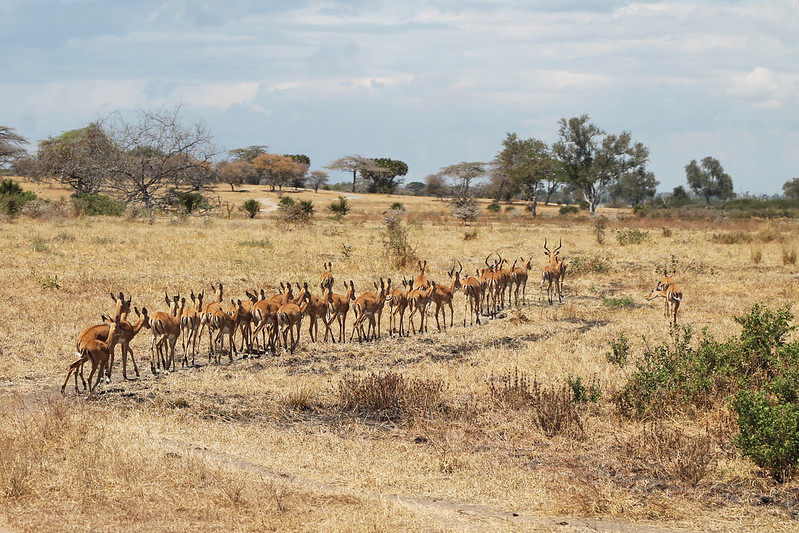
Most travellers reach the park by a short scenic flight rather than a long drive, which is why the fly-in package has become the default way to visit. You land at a bush airstrip, a camp vehicle collects you, and by that afternoon you are already on a game drive or a boat. The sections below walk through the package types you will actually be quoted, from a quick two-night taster to a full southern circuit, plus what each one tends to cover and where the money goes.
You can build this visit into one of our safaris in Tanzania for a seamless journey.
Nyerere Fly-In Safari Packages from Dar es Salaam and Zanzibar
The Nyerere fly-in safari is the backbone of nearly every quote you will see. A light aircraft leaves Dar es Salaam or Zanzibar and reaches the park in under an hour, dropping at airstrips such as Mtemere, Siwandu, Kiba or Beho Beho. Several operators fly the route daily, among them Coastal Aviation, Auric Air, Safari Air Link and Regional Air, so departure times are flexible and connections from an international arrival are usually same day.
Why fly rather than drive? The road from Dar runs roughly 184 to 230 kilometres depending on the gate, and stretches of it are slow going. Flying trades that for an easy transfer and buys you more time in the park. A standard fly-in package folds in the return air segment, road or boat transfers at the airstrip, full board at the camp, and the camp’s own game drives and river activities. What sits outside the price is almost always the same short list: park entry, the concession fee your camp pays per guest, tips, and anything personal.
If your trip starts or ends on the coast, ask whether the operator can route your flight straight through Zanzibar rather than backtracking to Dar. A direct Zanzibar to Nyerere hop saves a night and often costs the same, since it is the identical scheduled service.
Three-Night Nyerere Safari Package Along the Rufiji River
The three-night Nyerere safari is the sweet spot for a first visit, and the one most camps quote first. Three nights gives you two full days plus two half days, enough to mix morning and afternoon game drives with at least one Rufiji River boat safari and, if you want it, a guided walking safari. Camps set their drives around the light, so you head out around 6:15am before breakfast and again in the late afternoon when the heat drops and cats start moving.
Boating is the activity that sets this park apart from the northern circuit. You drift past pods of hippo, watch crocodiles slide off the sandbanks, and get close to waterbirds and elephants coming down to drink, all from the water rather than a road. Sightings are never promised, yet the river concentrates wildlife in a way that flat plains do not, so the odds sit in your favour through the dry months. Book the boat for the last hour of daylight and you get a sundowner on the water as a bonus.
Four-Day Nyerere Luxury Safari Tour
Stretch the same idea to a four-day Nyerere safari tour and the trip stops feeling rushed. That extra night lets you spread activities out, add a longer walking safari or a fly-camping night under mosquito nets, and still keep an unhurried pace. Luxury versions of this package lean on the private waterfront camps, small tented lodges with plunge pools, stilted rooms facing the river and guiding that is a clear step up.
The four-day format also suits anyone flying in from a distance, since a single travel day at each end still leaves three solid days on the ground. Guests who want the quietest game viewing pick camps in the southern and western concessions, where night drives and walking are allowed and vehicle traffic thins right out. It is the classic way to see the park without sharing every sighting.
The river does the work here. On a boat you are level with the hippos and the elephants at the bank, which is a very different feeling from watching them from a road above.
Nyerere and Zanzibar Beach Combo Safari Holidays
The Nyerere and Zanzibar combo safari is the most requested pairing out of southern Tanzania, and the logistics make it painless. Because the same light aircraft that serves the park also serves Zanzibar, you can run three or four nights of safari straight into four nights on the beach without a long detour. Typical eight to thirteen day itineraries put the park first, then fly you east to a beachfront resort to slow down.
On the safari half you are after elephant, buffalo, lion and the park’s African wild dogs, plus the river boating that no beach destination can match. The Zanzibar half swaps game drives for reefs, dhow sailing, Stone Town’s old lanes and spice farms. It is an easy contrast to sell to a mixed group, since travellers who tire of early starts get their lie-ins by the sea, while the keen ones can still dive or snorkel. Families like it for the same reason.
Safari half in Nyerere
Three to four nights, morning and afternoon game drives, Rufiji boat safaris, optional walking safari, full board at a river camp. Best in the dry season for open viewing.
Beach half in Zanzibar
Four or more nights at a coast resort, reef snorkelling and diving, dhow cruises, Stone Town and spice tours. Runs well year round outside the heaviest rains.
Nyerere and Ruaha Southern Circuit Safari Tours
For travellers who want wilderness over beach, the Nyerere and Ruaha southern circuit safari links the country’s two great southern parks by a short bush flight. Give it seven to twelve days to do properly. A common shape runs three nights in Nyerere for the river and boating, then a flight to Ruaha for game drives and walking among the baobabs and big elephant herds, with a final morning activity before you fly out.
The two parks feel genuinely different, which is the point of combining them. Nyerere is defined by water, its channels and lakes and the Rufiji itself. Ruaha is drier, higher and more rugged, strong on lion, cheetah and huge elephant numbers. Neither park sees the crowds of the north, so even in peak season you often have a sighting to yourselves. This is a trip for repeat safari-goers and anyone chasing space more than a checklist.
Budget Nyerere Camping Safari Packages
A budget Nyerere safari usually means a road transfer in place of flights, a group rather than a private vehicle, and simpler tented camps either just outside the park or at long-standing value properties like Rufiji River Camp on the river’s edge. Costs drop sharply once you cut the light aircraft and share the guide and jeep across a small group. Some budget trips even reach the park by the TAZARA train from Dar, which is slower but cheap and a story in itself.
The trade-off is honest to state. You spend more hours in transit, your camp is plainer, and you may sit further from the prime river frontage. What you keep is the wildlife and the boating, since a day boat safari and shared game drives are open to budget guests too. For younger travellers and anyone watching the total, it is a fair way into a park that is otherwise pitched at the top end.
Mid-Range Nyerere Tented Camp Safari Packages
The mid-range Nyerere tented camp safari is where most independent travellers land, and for good reason. You get permanent safari tents or a comfortable lodge, private or small-group game drives, and the full run of activities, all without the premium of an exclusive concession. Camps in this bracket sit on or near the Rufiji, so the boat and the drives launch close to your tent.
A mid-range fly-in package normally covers flights, full board, and the camp’s drives and boating, leaving park and concession fees to add on arrival. It suits couples and small groups who want proper comfort and a good guide, but do not need a plunge pool at every tent. The step up from budget is real: shorter transfers, better food, and camps positioned for the early light when the park is at its best.
Game drives
Morning and late-afternoon 4×4 drives run by the camp, timed for when lion, wild dog and elephant are most active.
Rufiji boat safari
Water-level viewing of hippo, crocodile, elephant and birdlife, often ending with a sundowner on the river.
Walking safari
Guided bush walks with an armed ranger, reading tracks and smaller signs on foot, offered by most camps.
Luxury Nyerere Safari Packages and Private Concessions
At the top, a luxury Nyerere safari package buys exclusivity as much as thread count. The best camps hold private concessions in the quieter south and west, where night drives and off-road tracking are permitted and you rarely see another vehicle. Think small intimate camps with widely spaced stilted tents, private decks over the water, plunge pools and a guide-to-guest ratio that lets you set the day’s pace.
These packages fold in the private light-aircraft transfers, all meals and selected drinks, and every camp activity, so the only extras are park fees, premium drinks and tips. Fly-camping, a night out under nets on a sandbank, is a signature add-on here. For honeymooners and anyone who wants the river more or less to themselves, the private-concession camps are the reason to spend at this level.
Boat and Walking Safari Activities Built Into Nyerere Packages
What separates a Nyerere package from a northern one is the activity mix, so it pays to know what your rate actually buys. Beyond standard game drives, most camps include at least one boat safari on the Rufiji and offer walking safaris on foot with an armed guide. Some southern concessions add night drives, which are not allowed everywhere in Tanzania and are a real draw for spotting leopard and smaller nocturnal wildlife.
Read the inclusions line by line. A fly-in package will name flights, transfers, full board and the camp’s drives and river activities, while listing park entry, the concession fee and gratuities as payable on arrival. Selected drinks, soft drinks, tea, coffee, local beer, house wine and water, are commonly thrown in at mid and top camps. If a walking safari or a second boat trip matters to you, confirm it is part of the package rather than a paid extra before you commit.
Getting to Nyerere for Your Safari and When to Go
Access shapes the whole trip. Scheduled light aircraft link the park to Dar es Salaam and Zanzibar in under an hour, landing at bush strips near the main camps, which is why fly-in dominates. Driving from Dar is possible over 184 to 230 kilometres to the northern gates, and the TAZARA train offers a slow budget alternative, but flying wins on time for most people.
Timing matters just as much as access. Mid June to October is the dry season and the strongest window for game viewing, when thin vegetation and shrinking water push animals toward the river and its channels. The green months from December to March bring thick new growth, newborns and excellent birding at lower rates, though heavier rain around March and April can close some camps. Pick the dry season for classic viewing, the green season for value and birds.
Dry season, mid June to October
Best all-round game viewing, thinner bush, wildlife drawn to the Rufiji. Peak demand, so book camps and flights early.
Handpicked Nyerere safari packages
Green season, December to March
Green country, young animals and top birding at lower prices. Some camps close around the heaviest rains of March and April.
Nyerere Safari Package Questions and Costs
How much do Nyerere safari packages cost per day?
As a rough guide, budget trips run about USD 250 to USD 400 per person per day with simpler camps and shared vehicles. Mid-range packages sit near USD 400 to USD 1,000 per person per day for comfortable tented camps and lodges. Luxury fly-in packages start around USD 1,200 per person per day and climb from there at the private-concession camps. The final figure depends on camp, season and how much of the flying is private rather than scheduled.
What does a three or four night fly-in package usually cost in total?
A four-night Nyerere trip commonly falls between USD 2,500 and USD 5,500 per person for the land arrangements, with internal light-aircraft flights adding roughly USD 400 to USD 600 per person on top. Shorter three-night versions cost less, and stripping out flights for a road transfer brings the total down again. Always check whether the quote already includes park and concession fees, since many do not.
What are the Nyerere National Park entry and concession fees?
Park entry for non-resident adults currently runs around USD 50 per person for a 24 hour period, with reduced rates for children, residents and East African citizens. Camps inside the park add a concession fee of roughly USD 80 per person per night, charged on top of entry. Note that the ticket is valid for 24 hours from entry, and park gates no longer take cash, so payment goes through a registered operator or the official portal.
How much does a Rufiji River boat safari add?
Where a boat safari is not already built into your package, it typically costs about USD 25 to USD 40 per person. Most mid-range and luxury camps include at least one boat trip in the daily rate, so you may not pay separately at all. If river time is the reason you are visiting, confirm the number of included boat safaris before booking.
How many days do I need for a Nyerere safari?
Three nights is the practical minimum and covers game drives, a boat safari and a walking safari at a comfortable pace. Four nights lets you slow down and add a longer walk or a fly-camping night. If you want to combine the park with Ruaha on the southern circuit, plan for seven to twelve days, and for a Zanzibar beach add-on allow at least eight days in total.
What is usually included in a Nyerere safari package, and what is not?
A standard fly-in package covers return light-aircraft flights, airstrip transfers, full board accommodation, the camp’s game drives and river activities, and often selected drinks like soft drinks, tea, coffee, local beer, house wine and water. Left out you will normally find park entry and concession fees payable on arrival, tips, premium drinks, international flights and Tanzanian visa costs. Reading the inclusions carefully is the best way to compare two quotes fairly.
Is Nyerere the same place as the Selous?
Yes, in effect. Nyerere National Park was carved from the northern part of the former Selous Game Reserve and now protects the prime wildlife area around the Rufiji River. Many operators still write Selous in package names because travellers recognise it, but the safari, the camps and the river are the same country you may have read about under the old name.