
Rufiji River safari camps are riverfront lodges and tented camps set directly on the water inside Nyerere National Park, the former Selous Game Reserve in southern Tanzania. Real riverside options include Sand Rivers Selous, Rufiji River Camp, Serena Mivumo River Lodge and Siwandu on Lake Nzerakera. Guests run boat safaris straight from the doorstep and watch elephant, hippo and crocodile from the deck.
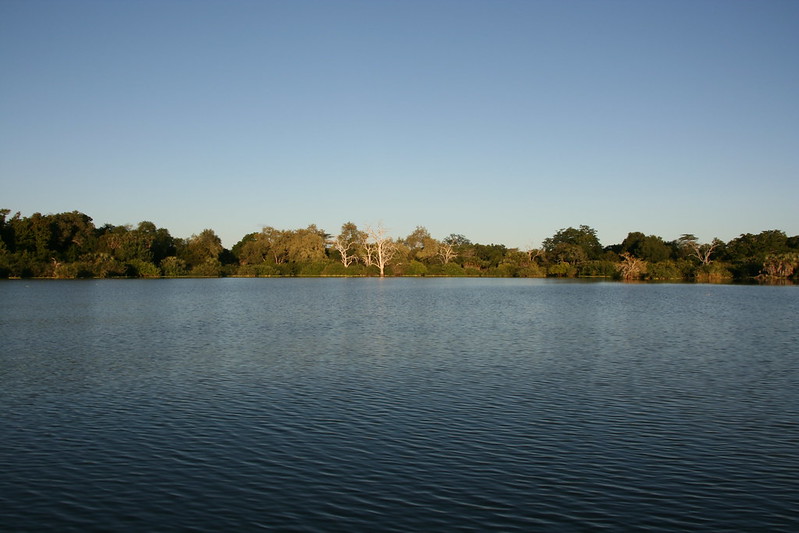
The Rufiji is Tanzania’s largest river by volume, and it more or less writes the rules for a safari here. Water draws the animals. Camps that sit on the bank or on one of the connected lakes put you where the wildlife already wants to be, so a good part of the day happens without you climbing into a vehicle at all. You wake, look out from the tent, and there is a hippo pod working the shallows below. That is the pull of a riverfront tent, and it is worth understanding which stretch of river each camp actually sits on before you book.
Planning a longer trip? Explore our Tanzania tours to see how Nyerere fits into a full itinerary.
Sand Rivers Selous Safari Camp on the Upper Rufiji River
Sand Rivers Selous is the classic Rufiji River safari address, set on a wide bend of the river in the western reaches of Nyerere National Park. This part of the park runs quieter than the busier lake circuit further east, and the camp trades on that space. Richard Bonham built it back in 1984, and the low stone and thatch rooms look straight down onto sand banks and rocky outcrops where crocodile haul out to bask.
Boating here works its way upstream toward the point where the river narrows and the walls of Stiegler’s Gorge begin to rise. A boat safari from Sand Rivers can be a slow drift for photography or a longer run up toward the gorge, and the camp is also known for fly camping, where you sleep out under a mosquito net with a bucket shower and a full team looking after you. Walking safaris leave straight from camp. Guests usually fly into Kiba airstrip, roughly a 45 minute hop, then a short drive gets you in.
The catch worth naming plainly: this is the pricier end of the park. You are paying for a low room count, a remote western position, and guiding that has real depth. For a first riverfront night that feels genuinely wild rather than manicured, few camps match it.
The western Rufiji around Sand Rivers stays cooler and less trafficked than the eastern lakes, but flights land at a different airstrip. Confirm your internal flight goes to Kiba, not the Mtemere or Siwandu side, or you add a long transfer you did not plan for.
Rufiji River Camp: Riverfront Tented Safari on the Northern Bank
Rufiji River Camp, run by the Foxes family, sits in the northeastern section of Nyerere National Park with fourteen classic tents strung along the riverbank. This is the camp people picture when they think riverfront tent. Each tent sits under a thatched roof with a veranda facing the water, and the setting gives you elephant coming down to drink, hippo snorting through the night, and crocodile stretched on the far sand.
What makes a Rufiji River safari here approachable is the range. Three larger suites pair two tents on a shared wooden deck with a private plunge pool, which suits families or a group travelling together. The rest are straightforward classic tents pitched for game viewing. Guiding is described honestly by most reviewers as friendly and solid rather than elite, and that matches the price bracket, which lands more mid range than the luxury names.
Activities read like a checklist of everything the river offers. Boat safaris glide upstream along the riverine channels, walking safaris head out from the tents, and game drives take in three nearby lakes. If you want a front row riverfront base without the top tier rate, this is often where planners point you first.
Serena Mivumo River Lodge Safari Overlooking Stiegler’s Gorge
Serena Mivumo River Lodge holds one of the most dramatic riverside positions in the whole park, set on the bank of the Rufiji with views reaching toward Stiegler’s Gorge. Where Rufiji River Camp keeps things simple, Mivumo goes the other way. Twelve chalets and a single villa are raised on wooden platforms to lift the view, dressed with marble basins and safari antiques, and linked by walkways to a central lounge and library that look over the water.
The main deck is the draw for a lot of guests, giving good sightings of hippo and elephant along the river without leaving the lodge. A boat safari from Mivumo is a natural fit given how close the gorge sits, and the lodge also runs open vehicle game drives, walking safaris, birding, bush breakfasts and sundowner runs. It reads as the polished, comfortable choice on this stretch, so pair it with a camp where you want more raw bush feel if you are building a longer trip.
On the Rufiji, the animals come to the water and you are already there. That single fact reshapes how a safari day is built.
Siwandu Safari Camp on Lake Nzerakera and the Rufiji Channels
Siwandu, an andBeyond camp, sits on the shore of Lake Nzerakera, an oxbow lake that adjoins the Rufiji River, tucked into a palm forest of borassus and doum palms. It counts as a riverfront camp in the fuller sense, because the lake feeds off the river and the boating takes in both. Octagonal tents stand on low platforms slightly back from the water, each with a fan, an outdoor shower and decks front and back.
A boat safari from Siwandu is one of the more varied on offer. Canopied motorboats leave from camp and work Lake Nzerakera, the Rufiji itself, and the maze of channels and tributaries around them. The camp also keeps a houseboat that takes up to twelve guests for slow lunches out on the lake, which is an unusual touch. Balloon safaris, walking safaris, game drives and cultural visits round out the days.
This lake district is the game heavy heart of the park. Lakes Manze, Tagalala, Siwandu and Nzerakera form a chain that holds animals through the dry months, so basing a couple of nights here for the water and channels makes sense whatever else your itinerary covers.
Why a Riverfront Safari Tent Changes the Whole Trip
Plenty of first time visitors ask whether paying for a riverside tent is really worth it over a cheaper inland room. On the Rufiji, the answer usually lands as yes, and the reason is simple. A riverfront safari camp collapses the distance between you and the wildlife. You are not driving to find water. The water is the view from your veranda, and in the dry season the animals concentrate along it.
The deck becomes part of the safari. Morning coffee comes with hippo grunting in the channel below. Elephant families cross to drink in the late afternoon while you sit still and watch. A boat safari can push off from a jetty near your tent rather than after a long transfer, which means you can be on the water for the best light without a dawn drive first. That water level view is something a game drive simply cannot give you, seeing crocodile at eye height on the sand and large animals framed against the palm lined far bank.
Boat safaris from the doorstep. Flat, open motorboats leave from camp jetties on the Rufiji and its lakes, giving close, low sightings of crocodile, hippo and drinking herds that a vehicle cannot reach.
Wildlife from the deck. At riverfront camps the veranda does real work. Hippo pods, elephant crossings and heavy birdlife show up without you leaving the tent, best through the dry months when water pulls everything in.
Walking safaris from the bank. Nyerere allows guided walking, and riverside camps make it easy to set off on foot along the floodplain with an armed guide, reading tracks and smaller detail the boat and vehicle skip.
Roho ya Selous and Lake Manze Safari Camps in the Lake District
Two more camps deserve a place on any riverfront shortlist, even though they sit on the connected lakes rather than the main channel. Roho ya Selous, an Asilia camp, stands on a small promontory on the west side of Lake Nzerakera, just north of the inland delta the Rufiji forms. Its name means heart of the Selous, and it earns it by sitting close to the waterway linking Lake Manze to Lake Nzerakera, right in the park’s strongest game area.
Lake Manze Camp lies on the shore of Lake Manze itself, in a grove of borassus, doum and wild date palms at the core of the park. It runs as one of the more affordable adventure style camps on the water, which makes it a common pick for travellers who want a lake edge tent without the top rates. Both camps put boat safaris and game drives within easy reach of the lakes, and both work well paired with a night or two on the main river for contrast.
Sand Rivers Selous. Western upper Rufiji near Stiegler’s Gorge. Remote, classic, higher end. Best for boating toward the gorge, fly camping and quieter wilderness.
Rufiji River Camp. Northeastern riverbank. Mid range classic tents plus family suites with plunge pools. Best for a true riverfront tent at a friendlier rate.
Serena Mivumo River Lodge. Riverbank with gorge views. Polished chalets, comfortable and full service. Best for comfort seekers who still want the water on their doorstep.
Siwandu and lake camps. Lake Nzerakera, Manze and the channels. Varied boating including a houseboat at Siwandu. Best for the game heavy lake district and channel cruising.
Boat Safari Adventures Direct From Your Rufiji River Camp
The boat safari is the signature of a Rufiji trip, and staying on the water is what makes it effortless. Nyerere is one of the few parks in Africa where you can view big game reliably from a boat, and the camps above all run their own trips. Flat, shallow boats move through the river’s lagoons, backwaters and channels, so you swap the dust of a drive for a slow, quiet approach.
From the water you get close to crocodile on exposed sand banks and into the middle of a hippo pod’s own world, watching from the surface rather than peering down a bank. Elephant and buffalo come to the edge to drink in the heat, and the birdlife along the Rufiji runs to more than four hundred species across the wider park, from fish eagle to carmine bee eaters nesting in the banks. Fishing for tiger fish is possible in season at camps like Sand Rivers.
Timing on the boat matters. Early morning and the last hours before dusk give the softest light and the most movement at the water, so a camp with a jetty close to your tent lets you catch both without a long haul either side of the trip. This is the practical case for a riverfront base rather than an inland one.
Best Time for a Rufiji River Safari
The dry season, roughly June to October, is the strongest window for a Rufiji River safari and for the camps along it. Water elsewhere in the park dries up, animals crowd the river and lakes to drink, and both boat and vehicle sightings improve as the bush thins out. Many riverside camps close or scale back through the heaviest rains, so the dry months are when the full range of camps and boating runs.
June to October, dry season. The prime stretch for riverfront camps. Wildlife concentrates on the Rufiji and its lakes, skies stay clear, and boat safaris run at their best. Book early, as this is peak demand.
November to December, short rains. Green returns and birdlife picks up, with lighter crowds. Showers are usually short. Boating stays good and rates often soften a little before the main holidays.
Handpicked Nyerere safari packages
March to May, long rains. The wettest window. Several riverside camps close, roads turn tricky and the river runs high. Not the time for a first Rufiji trip, though the scenery is at its greenest.
Sightings are never guaranteed, and even in the dry season a quiet morning happens. What the dry window buys you is the best odds, particularly for the water based game viewing the Rufiji is known for. If your dates are fixed to the green season, lean toward the camps that stay open year round and keep expectations honest.
Frequently Asked Questions About Rufiji River Safari Camps
Which camps sit directly on the Rufiji River?
Sand Rivers Selous sits on a bend of the upper Rufiji in the west near Stiegler’s Gorge, Rufiji River Camp lines the northeastern bank, and Serena Mivumo River Lodge stands on the bank with gorge views. Siwandu, Roho ya Selous and Lake Manze Camp sit on the connected lakes and channels that feed off the river, which still counts as riverfront in practice since the boating links straight to the Rufiji.
How much do Rufiji River safari camps cost per night?
Rates span a wide range. Classic camps like Sand Rivers run from around 1,200 US dollars per person per night fully inclusive in high season, while lake camps such as Lake Manze start closer to 850 US dollars in high season. Simpler lodges can sit in the 500 to 1,300 dollar band per person, and a four night Nyerere trip commonly lands between 2,500 and 5,500 dollars per person before internal flights, which add roughly 400 to 500 dollars.
How much is a boat safari on the Rufiji River?
When boating is not already bundled into a fully inclusive camp rate, a private boat safari tends to run about 25 to 30 US dollars per person for an hour on the water, based on a small group of five or six. Most riverside camps include boat safaris in their nightly rate, so check what your camp covers before budgeting extra.
When is the best time for a Rufiji River boat safari?
The dry season from June to October gives the best conditions. Water grows scarce elsewhere, so animals gather along the Rufiji and its lakes, and clear skies make for comfortable time on the boat. The short rains in November and December still boat well with fewer people, while the long rains from March to May see several camps close.
What wildlife can you see from a riverfront camp deck?
From the veranda of a riverside camp you commonly see hippo pods in the shallows, crocodile on the sand banks, and elephant and buffalo coming to drink, most reliably through the dry months. Birdlife is heavy along the river, with the wider park holding more than four hundred species. Nothing is guaranteed on any given day, but the concentration of animals at the water in the dry season stacks the odds in your favour.
How do you get to the Rufiji River camps in Nyerere National Park?
Most guests fly in on a light aircraft from Dar es Salaam or from the northern circuit, landing at airstrips such as Kiba, Mtemere or Siwandu depending on which camp they are heading for. Sand Rivers uses Kiba, about a 45 minute flight followed by a short drive. Match your internal flight to the correct airstrip for your camp, since landing on the wrong side of the park adds a long transfer.