
Sable antelope in Nyerere National Park are found mainly in the miombo woodland belts, where herds move between thick bush and water, so sightings are possible but never a given. Most people book a Nyerere safari for elephants, wild dogs and boat trips, then hope the sable show themselves. Nyerere National Park sits in southern Tanzania, carved from the northern Selous, and it holds one of East Africa’s better populations of this shy black antelope.
What follows is a plain look at where these animals live inside the park, how to tell one when you see it, and what a realistic sable antelope safari actually looks like on the ground. No promises about guaranteed sightings, because nobody honest can make them. Just the facts on habitat, timing and the drives and boat trips that give you a fair shot.
Sable Antelope Sightings on a Nyerere National Park Safari
Let me be straight with you first. A sable antelope is one of the harder animals to tick off on a Nyerere National Park safari, and plenty of visitors leave without one. These antelope keep to thicker cover than the open plains species, and the sound of a game drive vehicle tends to push them back toward the bush rather than pull them into view. Guides describe the sightings as hit and miss, and that is the honest word for it.
That said, the park does carry a real population, not a token few. Sable are a proper feature of a Nyerere safari, and a patient guide who knows the woodland tracks and the water points can improve your odds a lot. The trick is time on the ground and a driver who understands where the herds tend to drink. Rush the park in a single afternoon and the sable will almost certainly stay hidden.
Quiet approach pays off. Sable spook easily. If your guide cuts the engine and lets a herd settle near water rather than driving straight at them, you will usually get longer, calmer viewing. Ask for that patience before the game drive starts.
Spotting Sable Antelope in the Miombo Woodland
The reason a sable antelope safari works at all in Nyerere comes down to habitat. Much of the park is covered in miombo woodland, a dry broadleaf woodland dominated by drought resistant trees that shed their leaves in the dry months. When the canopy thins out, sunlight reaches the ground and feeds the grasses that grazers depend on. Sable are one of the classic miombo species, alongside the mopane belts that run through southern Tanzania.
This matters for where you look. You will not usually find sable out on the wide floodplains next to hippos and waterbuck. They favour the wooded ground away from the busiest riverfront, drifting out to feed and coming to water on their own schedule. A guide who reads the woodland, rather than sticking only to the popular Rufiji frontage, gives you a better line on them. Sable and this woodland go together, and knowing that shapes the whole game drive.
How to Recognise a Sable Antelope on Safari
Once you do find one, there is little chance of confusion, because an adult bull sable is one of the most striking antelope in Africa. Mature males carry a glossy black coat set against a white belly and bold white face markings, with a stiff upright mane along the neck. They are deep in the chest and short in the neck, built heavier than the sleeker plains antelope you meet earlier on a Tanzania safari.
Females and young animals look different, which trips up first timers. Cows are a rich reddish brown rather than black, and calves are born plain reddish brown with almost no markings, darkening as they mature. Both sexes carry those ringed horns that sweep up and curve back over the shoulders. On a bull the horns can run from roughly 81 to 165 centimetres, while a cow’s are shorter, somewhere around 61 to 102 centimetres. When your guide points and says sable, the horns are the giveaway.
Bull sable. Black coat, white underparts and face, thick upright mane, the longest and heaviest horns. The animal most people picture when they plan a sable antelope safari.
Cow sable. Reddish brown coat instead of black, similar white markings, shorter and lighter horns. Often seen in the main body of the herd with the young.
Calf sable. Plain reddish brown, few markings, no real horns yet. Stays close to the cows and is easy to overlook in the herd.
Sable Antelope Behaviour and Herd Life on a Game Drive
Watch a herd for a while on a game drive and the social side gets interesting. Sable live in groups of roughly 10 to 30 animals, mostly cows and their young under a single dominant bull. That structure means a good sighting often shows you a spread of ages at once, from dark old cows down to the pale calves.
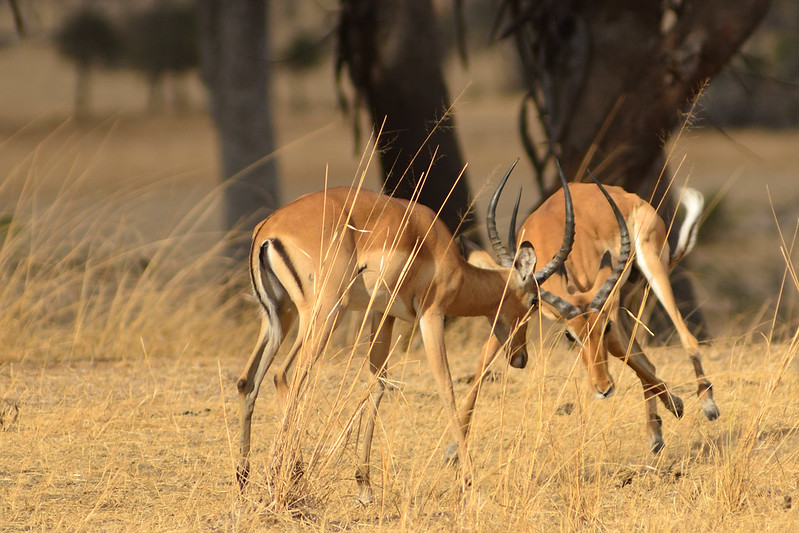
They are timid by default, yet a bull will turn aggressive when pushed. Cornered by lions, a sable drops its head and uses those curved horns as weapons, and big cats have died on them. Rival bulls settle disputes with a set ritual instead of a bloodbath. They sink to their knees and lock horns, wrestling at close quarters in a way that lets them test each other without one killing the other. You will not see a fight on every visit, but a herd at water on a quiet afternoon is a fine thing to sit with.
A sable will confront a lion head down rather than run, and more than one big cat has come off worse.
Why Nyerere and the Selous Are Known for Sable Antelope Safaris
The reputation goes back to the old Selous Game Reserve, the vast wilderness that Nyerere National Park was cut from. The wider Selous held large numbers of sable, figures in the region of several thousand, which put it among the more important homes for the species anywhere in East Africa. When the northern section was gazetted as Nyerere National Park in 2019, named for Tanzania’s first president Julius Nyerere, that sable country came with it.
Context helps here. Sable have vanished from big stretches of their old range across southern and eastern Africa, squeezed by hunting and the spread of farming. In many countries they are genuinely scarce now. So a park that still carries healthy herds in natural miombo is worth taking seriously if this animal is on your list. Nyerere and the neighbouring Selous blocks remain one of the stronger bets for a sable antelope safari on the continent, even accounting for how tricky the sightings can be.
Best Time for a Sable Antelope Safari in Nyerere
Timing changes your odds more than almost anything else. The dry season from June to October is the window most guides point to. Water gets scarce, the bush thins, and animals pull in toward the Rufiji River and its lakes, which makes the whole park easier to read. Sable still keep to their woodland, yet their daily walk to water becomes more predictable when the smaller pans dry up.
The green months bring their own pull, with newborns and strong birdlife, but the thick growth hides everything, and a shy woodland antelope is exactly the animal that disappears into it. If sable are a priority, weight your trip toward the dry months and give yourself several game drives rather than one. More time simply means more chances at a herd.
Dry season, June to October. Thin bush, animals near water, the best stretch for a sable antelope safari and for general game viewing across Nyerere.
Short dry spell around January and February. A drier gap in the green months, workable for safaris with fewer visitors about, though cover is still fuller than mid year.
Green season, March to May. Heavy growth and rain, lovely for birds and scenery, hardest for pinning down shy woodland species like sable.
Where to See Sable Antelope: Game Drives, Boat Safaris and Walking Safaris
Nyerere gives you three ways to look, and each suits a different part of the park. Game drives are your main tool for sable, since a vehicle covers the woodland tracks where the herds feed. Drives run morning and afternoon and last around two to three hours each, with the later run often working the ground back from the river as the heat drops. This is where a guide who knows the sable water points earns their keep.
A boat safari on the Rufiji is one of the park’s real signatures, drifting past crocodiles, hippos and huge numbers of birds. It is superb wildlife watching, though it is not really your sable option, since these antelope sit back from the open water. Treat the boat as the reason half the world visits Nyerere and a fair chance at elephants along the banks, then chase your sable on the drives.
A walking safari puts you on foot with an armed ranger, which changes the pace entirely and lets you read tracks, dung and the smaller life the vehicle skims over. You will not stalk a sable herd on a walk as a rule, yet it deepens the whole trip and sharpens your eye for the woodland the sable actually use.
Game drive safari. The primary way to look for sable antelope, working the miombo tracks and water points morning and afternoon. Best paired with patience and an unhurried guide.
Rufiji River boat safari. Around two hours on the water for hippos, crocodiles and birdlife. A highlight of any Nyerere trip, though not the place you will find sable.
Guided walking safari. On foot with an armed ranger, reading the small signs of the bush. It builds a feel for the woodland habitat sable depend on.
Other Wildlife You May See on a Nyerere Safari
Even on a day the sable stay hidden, a Nyerere safari rarely leaves you short. The park is one of the continent’s best places for African wild dogs, holding what may be the largest population anywhere, and a pack on the move is a serious highlight. Elephants, buffalo, giraffe, zebra, eland and wildebeest all range here, and the big cats, lion and leopard, work the same country.
The Rufiji, the largest river in Tanzania, anchors it all, feeding lakes thick with hippos and crocodiles. Birders do well too, with well over 400 species recorded across the park and the wider reserve. So while your sable antelope safari is the thread of this trip, the park hands you plenty of other reasons to keep the binoculars up.
Getting to Nyerere National Park for Your Safari
Handpicked Nyerere safari packages
Nyerere is a southern Tanzania park, and most trips start from Dar es Salaam. The road transfer runs roughly six to seven hours by vehicle, which suits travellers who want to watch the country change on the way in. It is the budget friendly route and a common choice for a first Nyerere safari.
Light aircraft charters are the faster option, dropping you at an airstrip inside the park in well under an hour of flying and saving a long day on the road. Many camps sit close to the Rufiji, which puts you within reach of the river frontage and the woodland tracks where the sable roam. Whichever way you arrive, give the park enough days to do it justice, because the shy species reward the visitors who stay.
Sable Antelope Safari FAQ
How much does it cost to visit Nyerere National Park for a sable antelope safari?
Park entry sits in the range of about USD 50 to USD 82.60 per adult per day depending on the source and whether VAT is counted, with children under 15 charged less, roughly USD 12 to USD 20. Guiding published figures vary, so confirm the current park fee through your operator before you travel. Cash is no longer taken at the gates, and payment now goes through a government electronic control number arranged by a registered operator.
What does a walking safari add to the cost?
A guided walking safari carries a separate charge of around USD 23.60 per person, plus a matching fee of about USD 23.60 for the armed ranger who must go with you. If you plan to stay inside the park at a camp or lodge, expect a concession fee on top, in the region of USD 70.80 per person per night. These are the extras that sit alongside the basic park entry.
Are sable antelope sightings guaranteed in Nyerere?
No, and any guide who promises one is overselling. Sable keep to thick miombo woodland and spook at vehicle noise, so sightings are genuinely hit and miss. Your odds go up with time in the park, a dry season visit and a guide who knows the water points, but plenty of visitors do not see them at all. Treat a sable sighting as a fine bonus rather than the certainty of the trip.
When is the best time for a sable antelope safari?
The dry season from June to October gives you the clearest run. Thinner bush and shrinking water pull animals toward the Rufiji and make their movements easier to predict, which helps with a shy woodland species like sable. The green months from March to May are harder for spotting them, since the growth hides everything, though they are excellent for birds and scenery.
How do I tell a sable antelope apart from other antelope?
An adult bull is unmistakable once you see it, with a glossy black coat, white belly and face markings, an upright mane and long ringed horns curving back over the shoulders. Cows and calves are reddish brown instead of black, so they take a second look. In all cases the tall backward sweeping horns are the surest sign, longer and heavier on the bulls.
Where in the park should I look for sable?
Focus on the miombo woodland away from the busiest river frontage, rather than the open floodplains. Sable feed in the wooded ground and come to water on their own schedule, so a guide who works the woodland tracks and quiet water points gives you the best line on them. Game drives are the tool for this, since boat safaris stay on the river where sable rarely go.