
Hyenas in Nyerere National Park are common and reliably seen, with the spotted hyena ranking as the park’s most numerous large carnivore. Travellers on a game drive or night drive regularly find them near the Rufiji River, at fresh kills, and around den sites, most often through the dry season. Nyerere National Park, formerly the Selous Game Reserve, is Tanzania’s largest national park, a southern wildlife area known for strong predator numbers, boat safaris, and walking safaris.
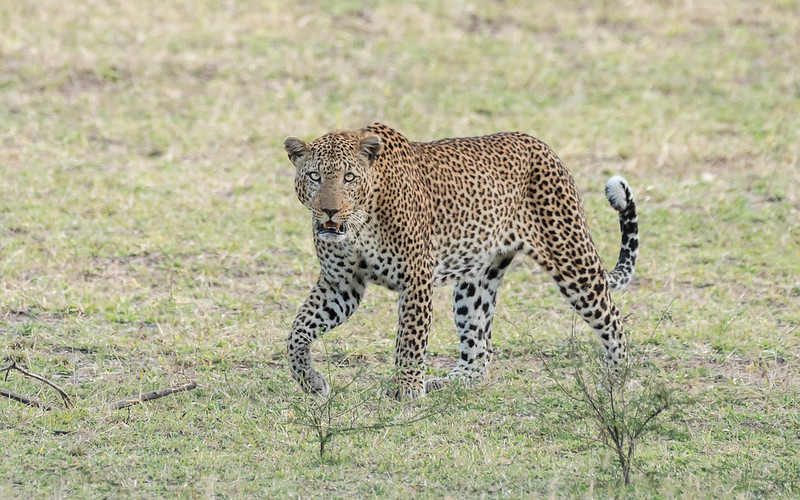
Most first-time visitors arrive picturing hyenas as skulking scavengers waiting for lions to finish. The reality is closer to the opposite. In this park the spotted hyena is a skilled hunter, a devoted parent, and often the animal that ends up controlling a carcass while the lions wait their turn. Watching a clan work is one of the more honest lessons a Nyerere safari can hand you about how the bush actually runs.
For routes, pricing and fresh ideas, browse our Tanzania trips.
Spotting Hyenas on a Nyerere National Park Game Drive
Start with the good news for anyone worried about a quiet trip. On a typical Nyerere National Park game drive, spotted hyenas are among the animals you are most likely to tick off, because they hold healthy numbers right across the park and are active over long stretches of the day and night. Early mornings are best. Guides often find clans padding back toward a den or lying flat in the cool dust near water, bellies full from the night before.
The land around the Rufiji River concentrates them. Open floodplain grass, patches of riverine forest, and the shrinking lakes of the dry season pull grazers in close, and where the prey gathers the hyenas follow. Look along drainage lines and at the edges of the woodland rather than the deep bush. A single hyena trotting with real purpose across open ground is worth following. It is usually heading somewhere, a kill or a squabble, and something is often happening at the other end.
Sightings are never a promise, and any honest guide will say so. Some drives turn up a den full of cubs, others give you one animal loping past at distance. Over a stay of two or three nights, though, most visitors on safari here see hyenas more than once, and often better than they expected.
Where Hyenas Turn Up
Floodplains and grassland near the Rufiji, the fringes of riverine forest, old kill sites, and communal dens dug into termite mounds or sandy banks. Water margins in the dry season are a strong bet on a morning game drive.
When They Are Active
Most active from dusk through the night and into early morning. The first hour after sunrise and the last light of a night drive give the best odds of watching hunting, feeding, or den behaviour rather than sleeping animals.
What To Listen For
The rising whoop that carries several kilometres, and the giggling call that flares up during a fight over food. Sound often locates a clan before your eyes do, so a good guide will cut the engine and let you listen.
Spotted Hyena Clans and Matriarchal Society on Safari
Spotted hyenas live in stable clans, and the social order is one of the most striking things you can watch unfold on a safari. A clan can run from a handful of animals to as many as a hundred, held together by fission-fusion behaviour, which is a plain way of saying they split up to hunt and forage alone or in twos and threes, then band together to defend a big kill or push back a rival group.
The clan is female-dominated. Adult females sit at the top of a strict linear ranking and outrank every male, whatever his size, and a female’s daughters tend to inherit her standing. Rank runs everything, from who feeds first at a carcass to which mothers get to raise cubs in the safety of the main den. Watch a group at a kill and the hierarchy is right there in front of you. The animal shouldering in and eating without challenge is usually a high-ranking female, while lower-ranking clan members and males hang back and grab what they can.
Territory matters to them. A clan holds a home range that can stretch anywhere from around 40 square kilometres to well over a thousand, and every member helps patrol the edges, scent-marking boundaries and answering calls from neighbours. In a place the size of Nyerere, there is room for many clans, which keeps the population strong and the interactions frequent for anyone out on a game drive.
Night Game Drives and Nocturnal Hyena Activity
A night game drive is where the hyena finally shows you its real timetable. Nyerere is one of the few places in Tanzania that runs night drives, generally from camps with access to private traverse, and they open up a park most day visitors never meet. Under a spotlight the bush fills with animals that stay hidden by day, and the hyena is one of the headliners.
After dark the clan gets to work. This is prime hunting time, and a night drive can put you alongside hyenas moving out to hunt, trotting between kills, or gathered noisily around a fresh carcass. The same drive often turns up civets, genets, the odd leopard slipping through the grass, and the reflective eye-shine that makes spotlighting so productive. Hyenas have excellent night vision and hearing, which is exactly why the daylight version of the animal, dozing in the shade, tells you so little.
If a night drive is on your list, book a camp that holds a private concession, since the after-dark drives run on those traverses rather than the main park circuits. Carry a light jacket, because the open vehicle gets cold once the sun drops, and let your eyes adjust between spotlight sweeps so you catch the movement at the edge of the beam.
One thing to hold in mind. Night drives trade the wide views of daylight for close, dramatic moments under a narrow beam, so the experience is different rather than simply better. Plenty of guests rate their night drive as the sharpest wildlife watching of the whole trip, hyenas included, but sightings still come and go with luck and season.
Hyenas as Hunters, Not Just Scavengers, on the Plains
The single most useful thing to know before a hyena safari here is that spotted hyenas hunt for most of their food. The scavenger label is largely wrong. Hans Kruuk’s long study of hyenas in the Ngorongoro and Serengeti back in the 1960s showed they kill roughly as much as lions do, and later work has held that up across the wider region.
In the Selous ecosystem that Nyerere now protects, the clans take mostly wildebeest, then buffalo, zebra, impala, giraffe, reedbuck and kongoni as the numbers allow. What a clan can bring down scales with how many hunters turn out. One or two animals will chase down something impala-sized, while a large coordinated group can test far bigger prey. They run their quarry over distance rather than ambushing it, wearing it down on the open ground where their stamina counts.
Then there are the jaws. A spotted hyena’s bite is built to crush bone, so a clan works through a carcass with almost nothing left behind, hooves and all. That efficiency is why they clean a kill site so fast, and why a full clan is such a powerful force at any carcass, whether they made the kill or claimed it. On a game drive you may well watch both sides of the animal in a single morning, hunter at first light and opportunist an hour later.
Hyenas Versus Lions and Wild Dogs on a Predator Safari
The rivalry between hyenas and the other big predators is some of the best drama a predator safari can offer, and Nyerere stages it often. Lions and spotted hyenas compete directly, and it does not always run the way people assume. A large clan can drive lions off a kill through sheer weight of numbers and nerve, and hyenas will readily push leopards and cheetahs off a carcass too. The balance tips on numbers. A lone hyena backs down from a lioness, while fifteen of them together are a serious problem for a small pride.
With African wild dogs the story turns lopsided the other way. Nyerere and the surrounding ecosystem hold one of the most important wild dog populations left in Africa, and hyenas shadow them to steal their kills, a habit called kleptoparasitism. Wild dogs hunt at high energy cost, so losing a carcass hurts them badly. The scale is worth stating plainly, since it varies by place. In the Selous, studies found wild dogs lose only around two percent of their kills to hyenas and under one percent to lions, which is low compared with some reserves and helps explain why the dogs do relatively well here.
Hyena and Lion Rivalry
Direct competitors over the same prey and the same carcasses. A big clan can chase lions off a kill, while a small group loses to a pride. Watch for tense standoffs on a game drive, all noise and bluff before anyone commits.
Hyena and Wild Dog Rivalry
One-sided in the hyena’s favour. Hyenas trail wild dog packs and rob their kills. In the Selous ecosystem the loss rate is low near two percent, part of why Nyerere holds such strong wild dog numbers for safari sightings.
Hyena at a Shared Carcass
Bone-crushing jaws let a clan strip a kill fast and leave little waste. Numbers decide who eats first, and rank decides it inside the clan. A carcass sighting can pull in several predators at once for the sharpest viewing.
Hyena Den Sites and Cubs Seen on Safari
Few sightings on a safari beat an active hyena den, and Nyerere gives you a fair shot at one. Clans use communal dens, often an old aardvark burrow or a hole dug into a termite mound or sandy bank, and several females raise their cubs in the same place. Each mother mostly feeds her own young, yet the shared den keeps the cubs safer and plugs them into the life of the clan early.
Spotted hyena cubs arrive unusually well developed. They are born with their eyes open and their teeth already through, which is rare among carnivores, and litters average about two cubs. A mother often keeps her newborns at a private den for the first couple of weeks so the pair learn each other’s voices, then carries them to the communal den to grow up among the others. High-ranking females get to rear their cubs in the main den from the start, while lower-ranking mothers more often tuck their litters away in isolated holes for those first weeks.
At a den on a morning game drive you might watch dark-coated cubs wrestling in the dust, testing the patience of the adults, ducking underground when a vehicle draws close. Dens shift over time and are not always in view, so ask your guide what the clans have been doing lately. When a den is active and accessible, it can hold you in one spot for an hour and still feel too short.
Best Time for a Nyerere Safari to See Hyenas
Timing shapes your Nyerere safari more than most people expect, and it shifts the odds on hyenas along with everything else. The dry season, roughly June to October, is the standout window. As the bush dries out and the smaller water sources vanish, animals crowd toward the Rufiji River and its lakes, the grass thins enough to see through, and predators including hyenas hold close to that shrinking water. July onward is peak game viewing.
The wet season, from about November to May, flips the picture. Rain spreads water across the whole park, so grazers scatter and the predators scatter after them, which makes any single sighting harder to line up. The country turns green and heavy, the afternoons get hot, and some tracks and camps close through the wettest stretch. Birding is at its best then, with migrants arriving and many species nesting, so the season suits a different kind of trip.
Dry Season Safari, June to October
Best overall for hyenas and big predators. Wildlife packs in around the Rufiji and its lakes, visibility is open, and boat safaris run well. July to October is the strongest stretch for game drives and night drives.
Wet Season Safari, November to May
Green, hot, and quieter, with animals spread out and sightings less predictable. Strong for birdwatching as migrants arrive and nesting picks up. Some camps and roads close in the heaviest rains, so check access before booking.
Boat Safaris and Walking Safaris in Hyena Country
What sets Nyerere apart is the spread of ways you can look for wildlife, and they stack together well on a trip built around predators. The Rufiji River boat safari is the signature. Drifting the calm water puts you level with pods of hippo, crocodiles hauled out on the banks, elephants coming down to drink, and a heavy cast of waterbirds. You are unlikely to watch hyenas from the boat, yet the river is the axis their whole world turns on, and seeing it from the water explains why the clans stay close.
A walking safari changes the register entirely. On foot with an armed guide you read the ground rather than scan the horizon, and hyena sign is everywhere once you know it. The bone-white droppings, the wide five-toed tracks, the flattened grass of a lie-up, and the well-worn path to a den all tell a story the vehicle rushes past. Guides use that sign to piece together which clans are working the area and where they have been feeding.
Run together across a few days, the game drive, the night drive, the boat and the walk each show you a different face of the same park. The hyena threads through all of them, which is part of why the animal ends up defining a Nyerere trip more than most visitors predict.
Getting to Nyerere National Park for Your Safari
Handpicked Nyerere safari packages
Reaching the park is straightforward, which helps for a first safari. Most travellers fly in from Dar es Salaam, a hop of about an hour on the scheduled light-aircraft services from Julius Nyerere International Airport, with carriers such as Coastal Aviation, Safari Air Link and Regional Air running daily flights onto the park’s airstrips. Flying saves a long day and drops you close to the camps.
Driving is the other option. The road trip from Dar es Salaam takes roughly five to six hours and costs less than flying, though it eats more of your time and comfort. For many people the sensible plan is to fly at least one leg. Whichever way you arrive, the park sits in southern Tanzania and pairs naturally with Ruaha or Mikumi for a longer southern-circuit safari if you want more time in the bush.
Hyena Safari FAQ
Are hyenas easy to see in Nyerere National Park?
Yes, relatively. Spotted hyenas are the park’s most common large carnivore and are active over long stretches of the day and night, so most visitors on a two or three night stay see them more than once. Dry-season mornings near the Rufiji River give the best odds, and a night game drive raises them further. Sightings are never guaranteed, but hyenas are among the more dependable predators here.
Do hyenas hunt or only scavenge in the park?
They hunt for most of their food. The old idea that hyenas only scavenge is largely wrong. Research going back to Hans Kruuk’s Ngorongoro and Serengeti work showed spotted hyenas kill roughly as much as lions, and in this ecosystem they take mostly wildebeest along with buffalo, zebra, impala, giraffe, reedbuck and kongoni. They also scavenge and steal kills when the chance comes, so you may see both behaviours on one game drive.
Can I do a night game drive to see hyenas in Nyerere?
Yes. Nyerere is one of the few parks in Tanzania that permits night drives, usually run from camps holding a private concession. After dark is when hyenas are most active, hunting and feeding, so a night drive is one of the better ways to watch them working alongside other nocturnal animals like civets, genets and the occasional leopard.
How much does a Nyerere National Park safari cost?
Costs vary with season and comfort level. Budget trips generally run around 250 to 400 US dollars per person per day, mid-range trips around 400 to 550, and luxury camps push higher, often 600 or more per person per night in peak months. Park entry is about 50 US dollars per adult for each 24 hours plus a conservation charge, and staying inside the park adds a concession fee. Flights from Dar es Salaam cost roughly 200 to 250 US dollars one way. Always confirm current rates with your operator, since fees change.
When is the best time to see hyenas on safari here?
The dry season, roughly June to October, is best. Water shrinks back to the Rufiji River and its lakes, prey concentrates, the grass thins for clearer views, and predators including hyenas hold close to the remaining water. July onward is peak game viewing. The wet season from November to May scatters the wildlife and makes sightings less predictable, though it is excellent for birding.
Are hyenas dangerous to safari visitors?
On a normal safari the risk is low. From a vehicle or a boat you watch hyenas at a safe distance, and they generally keep away from people. Walking safaris always go out with an armed, trained guide who reads the ground and keeps groups clear of dens and carcasses. Follow your guide’s instructions, keep food secured in camp at night, and treat hyenas as the powerful wild predators they are rather than the harmless clowns of cartoons.