
African buffalo in Nyerere National Park gather in big herds along the Rufiji River floodplains, and the dry season from June to October is the most reliable window to find them on a game drive. Breeding herds several hundred strong, plus solitary old bulls near the water, are seen most days. Nyerere National Park is Tanzania’s largest park, set in the south of the country and carved from the northern Selous Game Reserve, holding strong buffalo, elephant and lion numbers.
Buffalo are one of the animals people most want on their list, and this park delivers them in real quantity. You do not usually have to work hard for a sighting here. Along the river and its side channels, the grazing is good and the water is close, so the herds stay put through the dry months. What follows is a plain look at where the herds sit, how they behave, what the old bulls are about, and how a Nyerere National Park safari puts you near them safely.
Where to See Buffalo on a Nyerere National Park Safari
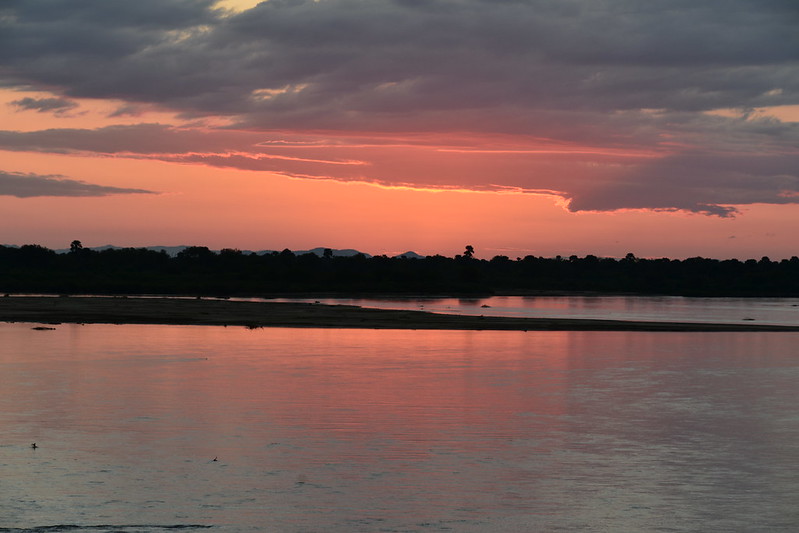
The short answer is the Rufiji River floodplains. This is the heart of a buffalo safari in the park, and it is where the northern game drive circuit spends most of its time. The Rufiji cuts through the top half of Nyerere, feeding a web of channels, oxbow lakes and open grass flats. As the dry season bites and the smaller pans dry out, buffalo pull in toward this permanent water and the fresh grazing along its edges.
Herds here can run into the hundreds. On a morning game drive you might round a bend in the track and find the flats simply covered in dark backs, calves tucked in among the cows, a few big bulls holding the edges. The open ground around the lakes gives you clean views, which is part of why the northern sector is the classic buffalo watching area. Thicker bush further from the river hides animals; the floodplain does the opposite.
Sightings are never a promise, but during peak dry months buffalo are among the animals you can count on more than most. Guides read the water. Where the river narrows and the grass stays green, the herds follow, and so do the vehicles.
Guide tip: Early light is your friend for buffalo photography on the floodplain. The herds graze in the cool of first light, then bunch up and rest through the heat. Ask your guide to reach the open flats near a lake by sunrise, before the animals drift back toward shade.
Big Herds of Buffalo on the Rufiji Floodplain Game Drives
The size of the herds is what stays with people. A buffalo herd in Nyerere is not a handful of animals; a single group can number several hundred, and on the richer floodplains they gather in bigger aggregations still. Cows and their young make up most of the herd, moving as a slow mass with a rough pecking order that decides who grazes where.
Big numbers are not just for show. Bunching together is one of the herd’s main defences. When animals crowd, it gets much harder for a lion to single out one target, so the group itself becomes the protection. Watch a herd move off the water and you see it work: the calves stay buried in the middle, the bulls drift to the flanks, and the whole thing shifts as one body.
On a floodplain game drive you often get the sound before the full sight of them. Low grunts, the tearing of grass, the odd bellow carrying across the flats. It is worth switching the engine off and just sitting with a big herd for a while rather than rushing the next tick on the list. The behaviour is the show.
A herd several hundred strong drifting across the Rufiji flats at first light is the sight the southern circuit is built around.
Dagga Boys: Old Buffalo Bulls on a Nyerere Safari
Away from the big herds you will meet the dagga boys. These are old bulls, past their breeding prime, that have left the herd and now live alone or in small bachelor groups of two or three. The name comes from the mud they wallow in; a dagga boy caked in dried grey mud, standing in a shrinking pool, is a familiar sight on a Nyerere safari.
They tend to hold near water and thick cover, so game drives along the river channels and quieter side tracks are where you find them. An old bull on his own is calmer to watch than a nervous herd, and the heavy sweep of horn on a mature male, with the thick fused base across the forehead, makes them a favourite for photographers. That fused base is called the boss, and it hardens with age into a solid shield.
A word of respect, though. Solitary bulls are widely regarded as the most unpredictable buffalo of all. Without the herd around them they rely on themselves, and they have learned to read danger, including lions, over many years. Your guide will keep a sensible distance and read the bull’s body language. A raised head and a hard stare mean give it room.
Buffalo and Lion Interactions on Nyerere Game Drives
The relationship between buffalo and lions is one of the better dramas of a southern Tanzania safari, and Nyerere is a strong place to catch it. Lions are the main predator of buffalo here, and the park holds healthy prides. Where big herds gather, the lions are rarely far off.
These are not one sided events. A grown buffalo is powerful enough to throw a lion with its horns, and herds defend their own with real force. When a pride presses a herd, the bulls often form a rough semicircle around the cows and calves, horns out. A calf in trouble will bellow, and that call brings the herd back at a gallop. Lions are hurt and sometimes killed in these standoffs, so a pride will usually test a herd carefully before committing.
On a game drive you might come across the aftermath more often than the chase itself: a pride resting near a herd, the buffalo watching them, both sides holding position. That tension is worth sitting with. If your guide finds a pride shadowing buffalo along the river, it can be one of the more gripping mornings a Nyerere safari offers, though nothing about a hunt is ever guaranteed.
Breeding herds
Cows, calves and younger bulls, several hundred strong, out on the open floodplain grazing near water. Best found on early game drives. Their safety comes from numbers, so they stay bunched and move as one.
Dagga boys
Old solitary bulls or small bachelor groups, holding near river channels and mud wallows. Calmer to photograph up close, but the most unpredictable of all buffalo, so guides keep extra distance.
Buffalo Behaviour to Watch on a Safari
Half the pleasure of watching African buffalo is reading what they do. Mud wallowing is a good one. Buffalo roll and stand in mud holes to cool off and to shed skin parasites, but there is a social side too. A wallow picks up the scent of the bull that claims it and quietly marks his patch, so those mud caked bulls are doing more than staying cool.
The horns tell a story of age and rank. In mature males the bases thicken and fuse across the forehead into the boss, that hard helmet of horn. Bulls jostle and spar with them to sort out who is dominant, and the same weapon turns outward against a lion. Watch a herd for long enough and you see the constant quiet shoving that keeps the order in place.
Calves sit at the centre of herd life. Cows usually have their first calf at four or five and then breed roughly every other year, with most births falling at the end of the rains when the grass is at its best for nursing mothers. The bond runs deep, and it is the reason a buffalo herd reacts so fiercely to any threat against its young. Bring patience and a decent lens, and a stationary herd rewards you far more than a quick photo and a drive on.
Floodplain game drives
The main way to see big buffalo herds, run in an open vehicle along the Rufiji flats and lake edges. Mornings are best, when the herds are out grazing in good light.
Rufiji boat safaris
A water level view of buffalo, elephant, hippo and crocodile along the banks. Calm, close and a different angle on the herds that come down to drink.
Guided walking safaris
Tracking on foot with an armed ranger, reading buffalo sign, tracks and wallows up close. Small groups, single file, run in the tamer areas away from big predator concentrations.
Buffalo Watching on Rufiji River Boat Safaris
Nyerere is one of the few Tanzanian parks where you can watch game from the water, and a Rufiji River boat safari gives you buffalo from a fresh angle. The abundant water holds big numbers of hippo and crocodile, and it pulls elephant and buffalo down to the banks to drink. Drifting the channels, you slip past herds without the noise and dust of a vehicle, which often lets you get closer than you would on land.
Buffalo come to the river to drink and wallow, so the boat catches them at the edges rather than out on the open flats. You might glide past a group standing belly deep in a side channel, or old bulls plastered in mud along a sandbank. The quiet approach is the strength of it. Sound carries less over water, and the animals stay relaxed.
A boat safari pairs well with the game drives rather than replacing them. The vehicle takes you to the big herds; the boat brings you to the river’s edge for elephant, buffalo, hippo and a long list of waterbirds. Together they cover the buffalo from both angles across a single day.
Buffalo Safety on Walking Safaris in Nyerere
A walking safari in Nyerere puts you on the ground where buffalo live, and it is one of the reasons the park draws walkers from across the southern circuit. Both short morning walks and longer routes over several days run along the Rufiji. On foot you read the things a vehicle rushes past: fresh tracks, flattened grass where a herd bedded down, the strong smell of a wallow.
Safety is handled seriously, because buffalo deserve the respect. Buffalo, especially cows guarding calves and lone rogue bulls, are among the more dangerous animals in East Africa when surprised at close range. Every walk goes out with at least one qualified armed ranger, groups are kept small, and it starts with a mandatory briefing. You walk in single file, keep quiet, and do exactly what the guide says. Walks are routed through the tamer areas rather than into the middle of big predator ground.
Handled this way, the real risk of a bad meeting is low. The guide watches the wind, keeps distance from any herd, and never lets the group get between a buffalo and its escape route or its calf. Approached with those rules, tracking buffalo on foot is one of the steadier and most rewarding things you can do here, far more about reading sign than getting dangerously close.
On foot: If the guide stops and raises a hand, stop at once and stay silent. Most buffalo just want space. Never run, never split from the group, and let the ranger set the distance. The point of a walking safari is reading the bush, not closing in on the animals.
Best Time for a Buffalo Safari in Nyerere National Park
The dry season, June to October, is the best time for a buffalo safari in Nyerere. As the land dries out, the smaller water sources vanish and animals converge on the Rufiji and its wetlands. The herds concentrate, the bush thins so you can see through it, and the tracks stay firm and open. Cooler weather and fewer mosquitoes are a bonus of these months.
June to October, dry season
Peak buffalo viewing. Herds gather on the Rufiji floodplains, vegetation is sparse, and game drives run without trouble. July and August are the busiest and priciest; September and October stay excellent and can be a touch quieter.
November to May, green season
Rains spread the water and the herds scatter across a wider area, so buffalo take more finding. The country turns green and birding is at its peak, but some camps close and heavy rain can shut roads for stretches.
If buffalo and predator action are your priority, aim squarely at the dry months. The green season has its own appeal for birders and for a quieter park, but the herds are harder to pin down once the water is everywhere and the grass is high.
Getting to Nyerere National Park for Your Safari
Handpicked Nyerere safari packages
Nyerere sits in southern Tanzania, roughly 230 kilometres by road from Dar es Salaam to the Mtemere Gate. Covering close to 30,900 square kilometres, it is Tanzania’s largest park and one of the biggest protected areas on the continent, so most visitors fly in rather than drive the whole way.
Light aircraft run daily from Dar es Salaam to the airstrips near the Rufiji camps, and the hop takes under an hour, dropping you straight into the buffalo country of the northern sector. Road transfers are possible and cheaper but long, with the last stretch rough going in the wet. Most photographic camps sit along or near the river, which puts you within easy reach of the floodplains where the big herds gather. For a first buffalo safari, flying in and basing near the Rufiji is the simplest way to spend your time on game drives rather than on the road.
Frequently Asked Questions About Buffalo in Nyerere National Park
How many buffalo live in Nyerere National Park?
Nyerere and the wider Selous ecosystem hold very large buffalo numbers, with breeding herds that regularly run several hundred animals and gather in bigger aggregations on the floodplains. Nobody counts them to the individual, but Tanzania as a whole is thought to hold in the region of 400,000 African buffalo, and the Nyerere and Selous area is one of the strongholds. In practice, sightings of big herds are common through the dry season, though never guaranteed on any single drive.
When is the best time to see buffalo herds on a game drive?
The dry season from June to October is the most reliable window. Water shrinks back to the Rufiji, the herds concentrate near it, and the thinner bush makes them easy to see. July and August are the peak and busiest months, while September and October stay strong for buffalo and can feel a little quieter. Early morning drives give you the best light and the most active herds.
Are buffalo dangerous on a walking safari?
Buffalo can be dangerous when surprised at close range, particularly cows with calves and solitary old bulls. That said, walking safaris in Nyerere are run with strict safety rules. Every walk goes out with a qualified armed ranger, groups stay small, and you follow a briefing, walk in single file, and keep quiet. Walks are routed through calmer areas. Handled this way the real risk of a bad meeting stays low, and the focus is on reading tracks and sign rather than getting close.
What is a dagga boy?
A dagga boy is an old male buffalo, past his breeding years, that has left the herd to live alone or in a small bachelor group. The name comes from the mud they wallow in. You find them near water and thick cover, often caked in dried grey mud. They carry heavy fused horn bosses and are prized by photographers, but they are also the most unpredictable buffalo, so guides keep a respectful distance.
How much does a buffalo safari in Nyerere National Park cost?
Park entry for non resident adults currently runs about 50 US dollars per person for each 24 hours, with children under 15 charged a lower rate. If you stay at a camp inside the park you also pay a concession fee, currently around 70 US dollars per person per night. A guided boat safari on the Rufiji typically costs somewhere between 25 and 40 US dollars per person. Most safari packages fold the park and activity fees into the total, so check what your operator has included. Note that gate payments are cashless and handled through the government electronic payment system.
Can you see buffalo from a boat safari on the Rufiji?
Yes. Buffalo come down to the Rufiji to drink and wallow, so boat safaris often pass herds and old bulls along the banks and in the side channels. The boat is quiet, which lets you get a close and calm view. It works best alongside the game drives, since the vehicle takes you to the big herds out on the floodplain while the boat brings you to the river’s edge for buffalo, elephant, hippo and crocodile.