
A Nyerere fly-camping safari means walking out into the bush with a guide, then sleeping in a simple tent under the stars beside the Rufiji River rather than back at a lodge. You spend the day on foot tracking wildlife, and the night around a campfire with an armed ranger nearby. Nyerere National Park, the former northern Selous in southern Tanzania, is the country’s largest park and the home of this walking-based adventure.
Plenty of people who book this trip have never slept in open wilderness before, and that nervous feeling is normal. The camp is basic but looked after, the guides do this constantly, and the risks are smaller than most first-timers fear. What follows walks you through exactly how a fly camping safari works here, what a night out really involves, who runs them, and when to come.
Planning a longer trip? Explore our Tanzania tours to see how Nyerere fits into a full itinerary.
What a Nyerere Fly Camping Safari Actually Involves
Fly camping is old safari shorthand for a light, mobile camp that gets carried in and set up for a night or two, then packed away. There is no permanent structure. On a Nyerere fly-camping safari you typically base yourself at a main camp such as Sand Rivers, then head out on foot for an overnight in the wild. The kit is stripped back to essentials: a bedroll with clean linen inside a mosquito net tent, a canvas bucket rigged as a hot shower, a long drop loo screened off at a polite distance, and a fire to cook on and gather around.
The point is closeness to the ground. You hear the bush at night without generator hum or lodge walls between you and it. Sand Rivers and a handful of other operators treat the fly camp as an add-on to a walking safari, usually one night, sometimes two, and it sits at an extra cost on top of your normal stay. Children need to be twelve or older to walk and sleep out, a rule set for safety on foot.
Good to know: fly camping in Nyerere is almost always sold as a supplement to a lodge or camp stay, not as a standalone product. You walk out in the afternoon, sleep once under canvas, and walk back the next morning. Longer four day wilderness walks exist too, where the fly camp gets moved ahead of you each day.
Walking Safari by Day, Fly Camp by Night
The heart of this trip is the walking safari, and the fly camp is where it ends up. Most walks start at first light or in the cooler late afternoon, when animals are moving and the heat is bearable. A typical outing runs three to five hours and covers somewhere between five and ten kilometres, though the guide sets the pace by what the ground offers rather than by a fixed target.
On foot the safari changes character completely. You read tracks in the sand, follow the alarm calls of birds, and learn what a broken twig or fresh dung actually tells you. Big game seen from a vehicle becomes something else entirely when you are level with it and quiet. Guides tend to route walks through open country where the more dangerous animals are less concentrated, which keeps the day steady rather than tense.
By late afternoon you reach the fly camp. The gear has gone ahead by vehicle or boat, so the tents are pitched and the fire is going as you arrive. Then the day slows right down. You watch the sun drop, the stars come up, and the sounds of daytime hand over to the night shift.
Daytime is for tracks and distances on foot. Night is for the fire, a plate of good food, and the calls of the bush a short walk from where you sleep.
Setting Up the Fly Camp on the Rufiji River
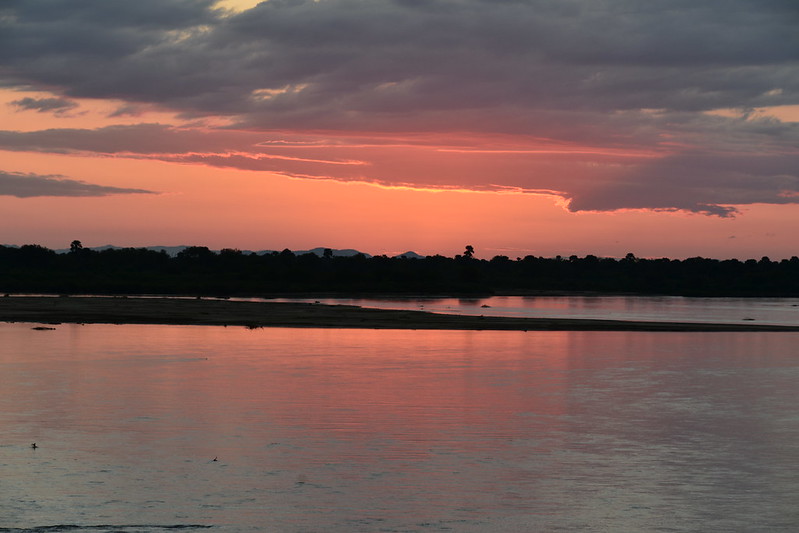
The Rufiji River shapes much of this park and many fly camps pitch within reach of it or its side channels. The river is Tanzania’s largest, running across Nyerere before it reaches the Indian Ocean, and it draws animals to drink, which makes a riverside camp a lively place to wake up. Sand grows warm underfoot, hippos grunt out in the current, and fish eagles call over the water.
A fly camp is deliberately plain. Expect a small tent with a proper bedroll and fresh linen, a mosquito net over you, and canvas walls that keep the weather off without shutting out the sound. Washing is done with a bucket shower, a canvas bag of warm water hoisted on a branch, which works far better than it sounds after a day on foot. The loo is a screened long drop, close enough to reach at night but set apart from the sleeping tents.
Meals surprise people. Even out here the food tends to be generous, cooked over the fire and eaten by lamplight, with cold drinks kept chilled somehow. It is rough living dressed up just enough to feel like a treat rather than a hardship.
Sleeping Under the Stars on Your Fly Camping Safari
The night is the reason people book a fly camping safari in the first place. Once dinner is cleared and the fire burns low, the bush takes over. Hyena whoop in the distance, hippos crash back into the river, and now and then a lion calls far enough off to be thrilling rather than alarming. You lie in the tent with the net above you and the canvas open to the sound.
Some guests barely sleep the first night, too wired by the newness of it, and that is part of the experience rather than a failure of it. A guard, often a local askari, keeps watch through the dark hours, and an armed ranger stays with the group. You do not wander off alone after dark, and if you need the loo in the night, you use your torch and stay close.
By dawn the camp stirs with tea by the fire and the birds starting up. Sightings on a night like this are never guaranteed, and part of the appeal is that you take what the bush gives. Some nights are loud with activity, others are quiet and full of stars, and both are worth the walk out.
Safety, Rangers and Rules on a Walking Safari
Every walking safari inside Nyerere goes out with at least one qualified armed ranger, a requirement of the Tanzania National Parks Authority rather than an optional extra. The ranger walks in front, reads the ground ahead, and makes every call about distance and direction. Alongside the ranger walks your guide, who handles the interpretation and keeps the group together.
A safety briefing before you set off is compulsory, and the rules are simple to follow once you know them. Walk in single file directly behind the guide. Keep your voice low and your movements calm. Wear muted colours, never bright white and never dark blue or black, since blue and black draw tsetse flies. Do exactly what the ranger and guide say the moment they say it. Groups are usually capped around six guests so one guide can manage everyone properly.
On safety: the walks are routed to avoid the highest concentrations of dangerous game, and the actual chance of a bad wildlife run-in is small when you follow the briefing. The armed ranger is a precaution and a legal rule, not a sign that trouble is expected.
Wildlife You Might See on a Nyerere Walking Safari
Nyerere is one of the best places in Africa to look for African wild dogs, with the wider Selous and Nyerere ecosystem thought to hold around 800 of them across roughly twenty to thirty packs. On a walking safari or the drives that bookend a fly camp, you also stand a fair chance with elephant, buffalo, giraffe, hippo, and the general plains game that fills the open country near the river.
Predators are here in good numbers. Lion are the park’s signature animal, leopard move through the thicker cover, and the rare after-dark sightings on private concession drives can turn up civet, genet, and white-tailed mongoose. None of this is promised on any single trip, and honest guides will tell you when a sighting is likely and when it simply is not.
Birders do very well too. The park logs more than 440 recorded species, from African fish eagles and kingfishers to bee-eaters and the harder to find Pel’s fishing owl along the river. Walking slows you down enough to actually notice the smaller birds a vehicle would blow straight past.
On foot by day
Tracking, birding and reading sign on a three to five hour walk with a guide and armed ranger, covering roughly five to ten kilometres at an easy pace.
Fly camp by night
A single tent, bedroll and mosquito net, bucket shower and long drop loo, dinner by the fire, and the sounds of the bush while you sleep under the stars.
River and drives
Boat safaris on the Rufiji for hippo, crocodile and waterbirds, plus game drives that often bracket the walking and fly camping part of the trip.
Who Offers Fly Camping Safaris in Nyerere (Selous)
The name most linked to fly camping in Nyerere is Sand Rivers, run by Nomad Tanzania on the Rufiji, which built its reputation on walking safaris and nights out under canvas. Fly camping there comes as a supplement to a stay at the main camp, done for a night or two, and it is widely rated as one of the strongest walking and sleeping-out setups in the park.
Other operators run comparable trips. andBeyond markets a walking safari with a fly camping option in the reserve, and specialist outfits arrange multi day wilderness walks where the fly camp shifts location each day as you cross seriously remote ground. The style varies from a single romantic night beside the river to a genuine point to point trek, so it is worth matching the operator to how far into the wild you actually want to go.
One night fly camp add-on
Best for first-timers and shorter trips. You keep the comfort of a main camp and add a single night in the open. Low commitment, high reward, and easy to combine with drives and boating.
Multi day walking and fly camp trek
Best for the fit and the keen. Camps move with you across remote country over several days. More demanding, far more immersive, and the truest version of a wilderness walking safari.
Best Season for a Nyerere Fly Camping Safari
Timing matters more here than on a straightforward lodge safari, because you are walking and sleeping outside. The dry season from June to October is the window most people aim for. The vegetation thins, animals concentrate around the shrinking water sources, the ground is firm underfoot, and there are fewer mosquitoes and cooler nights to deal with.
July and August are the busiest and priciest months. Late June often gives you dry conditions before the high season really lands, which suits travellers watching the budget. The green months either side bring heavier rain, thicker bush, and some camps closing outright, so walking safaris and fly camping largely pause. If sleeping out is the whole reason for your trip, plan around the dry months and you give yourself the best odds of firm trails and busy waterholes.
June to October, dry season
The prime stretch for walking and fly camping. Thin bush, wildlife pulled to the water, firm trails and cooler nights. July and August are peak and cost the most; late June is quieter value.
November to May, green season
Rain thickens the bush and some camps close. Photography can be beautiful and prices drop, but walking and fly camping are limited, so it suits a different kind of trip.
Getting to Nyerere for Your Safari
Handpicked Nyerere safari packages
Most visitors reach the park by light aircraft, and it is the sensible way in for a fly camping safari. Scheduled and charter flights run from Dar es Salaam and from Zanzibar to the airstrips that serve the camps along the Rufiji, and the hop takes well under an hour. From the airstrip your camp collects you by vehicle, and the walking and fly camping side of the trip is arranged from there.
Driving in from Dar es Salaam is possible but long and rough, and it eats a day at each end, so flying is what nearly everyone chooses. Whichever way you come, the camp handles the park entry and the logistics of moving your fly camp gear, which keeps the planning off your plate and lets you focus on the walk.
Frequently Asked Questions
How much does a Nyerere fly-camping safari cost?
Fly camping is normally sold as a supplement on top of your main camp rate, and at properties like Sand Rivers the extra runs around 225 US dollars per person for the night out. A luxury walking safari built mainly around fly camping can work out near 800 US dollars per person per day, while Selous and Nyerere camps overall tend to sit between roughly 500 and 1,500 US dollars per person per night depending on the season and the level of comfort. The exact figure moves with the operator and the time of year, so treat these as guide ranges rather than fixed quotes.
Is a fly camping safari safe with the wildlife around?
It is safer than most first-timers expect. Every walk goes out with a qualified armed ranger required by the parks authority, groups are small and briefed before setting off, and a guard keeps watch at camp through the night. Walks are routed to avoid the heaviest concentrations of dangerous game. Follow the guide’s instructions and the real chance of a serious wildlife problem stays very low.
What is the night actually like when you sleep out?
You sleep in a simple tent with a bedroll, clean linen and a mosquito net, close enough to the fire to feel looked after. After dinner the bush gets loud with hippos, hyena and sometimes distant lion. A bucket shower and a screened long drop loo cover the basics. Some people barely sleep the first night from sheer novelty, which is part of the appeal rather than a drawback.
When is the best time for a Nyerere fly-camping safari?
The dry season from June to October is the window to aim for, when the bush thins, animals gather at the water, trails stay firm and nights turn cooler. July and August are peak and priciest. Late June offers dry conditions at gentler rates. The green months from November to May bring rain and camp closures, so walking and fly camping largely pause.
Who can go and are there age limits?
Walking safaris and fly camping in Nyerere carry a minimum age, usually twelve years old, because everyone travels on foot and must follow safety instructions. You need a reasonable level of fitness to walk three to five hours over five to ten kilometres, though the pace is unhurried. Multi day walking treks ask for more stamina than a single night out from a main camp.
What should I pack for fly camping in Nyerere?
Keep it light and muted. Closed walking shoes or light boots, long sleeves and trousers in khaki, olive or brown, a wide brim hat and sunscreen, plus a warm layer for cold early mornings. Avoid white, and avoid dark blue or black, which attract tsetse flies. Bring a torch or headlamp, insect repellent and a refillable water bottle. The camp supplies the bedding, the shower and the meals.