
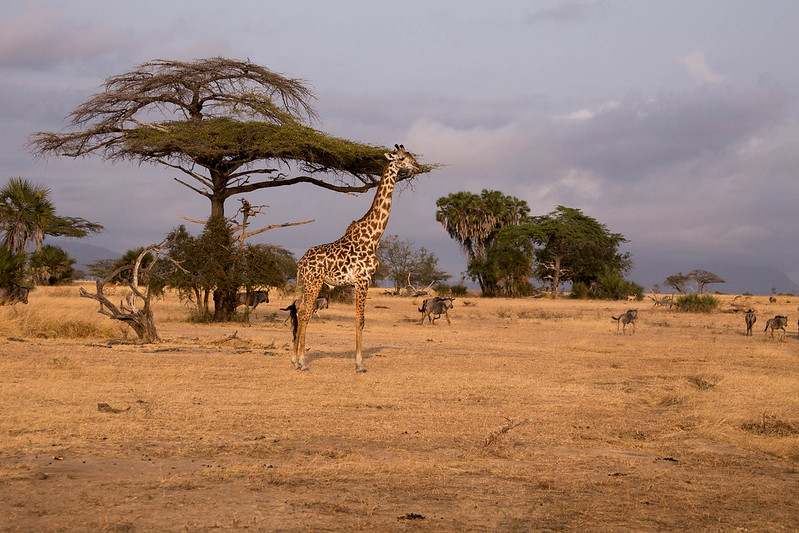
Nyerere National Park and the Selous Game Reserve are two pieces of what used to be one protected area in southern Tanzania. In 2019 the government turned the northern section, roughly 30,893 square kilometres, into Nyerere National Park for photographic safaris, while the southern hunting blocks kept the older Selous name. Nyerere National Park follows the Rufiji River and now ranks as the largest national park in Tanzania.
If you have been reading around and come away confused, you are in good company. Half the safari pages online still call the place Selous, the other half call it Nyerere, and plenty use both names in the same paragraph without ever saying why. The short version is that the wilderness did not move or change. Its status did. What follows sorts out which name means what, why the change happened, and what it actually means for the kind of trip you can take there.
Ready to start planning? Compare our Tanzania trips to find the trip that suits you.
Nyerere Planning Guides and Essentials
Practical guides covering how to reach the park, what to pack, what a safari day looks like and the background worth knowing before you travel.

Dar es Salaam to Nyerere
Flying is the fastest way from Dar es Salaam to Nyerere National Park, a scheduled bush flight of roughly 45 minutes to one hour with Coastal Aviation or Auric Air into airstrips like Mtemere and Siwandu. Driving covers 230 to 240 km through Kibiti and Mloka…
Read the full guide →
Driving to Nyerere National Park
Driving to Nyerere National Park from Dar es Salaam takes roughly five to eight hours along a 230 to 240 km route that runs south through Kibiti and Mloka to the Mtemere gate. The first stretch is sealed tarmac, the last portion graded gravel, and a…
Read the full guide →
Exploring Nyerere’s Landscape
Nyerere’s Landscape and Scenery – Rivers, Plains, Woodlands, and Wildlife Areas offer diverse ecosystems within Nyerere National Park, one of the largest parks in Africa. Located in southeastern Tanzania, it features the Rufiji River, expansive plains, dense woodlands, and rich wildlife habitats. Visitors can explore iconic…
Read the full guide →
Flights to Nyerere National Park
Flights to Nyerere National Park mean a short light aircraft hop rather than a long drive, with scheduled Cessna Caravans leaving Dar es Salaam and touching down at the park airstrips in roughly 45 minutes. Daily morning and afternoon services run with Coastal Aviation, Auric Air…
Read the full guide →
Flora and Fauna of Nyerere National Park
The Unique Flora and Fauna of Nyerere – Plants, Wildlife, and Rare Species highlight the rich biodiversity of Nyerere National Park in Tanzania. This protected area is home to vast floodplains, miombo woodlands, and savannah, supporting species like the African wild dog, elephant, hippopotamus, and diverse…
Read the full guide →
History of Nyerere National Park
The History of Nyerere National Park – From Selous Game Reserve to Today traces back to its origins as part of the vast Selous Game Reserve, established in 1922 and later designated a UNESCO World Heritage Site in 1982. In 2019, a significant portion of the…
Read the full guide →
How to get to Nyerere National Park Tanzania
Most safari travellers reach Nyerere National Park by light aircraft from Dar es Salaam, a hop of roughly 45 minutes to an hour, or by road on a drive of about 230 to 240 km to Mtemere Gate taking five to eight hours in a 4x4.…
Read the full guide →
Is Nyerere National Park Safe?
Yes, a Nyerere National Park safari is safe for the vast majority of visitors who travel with a licensed operator and follow their guide. Serious incidents on organised trips are rare here. Nyerere National Park, the former northern section of the Selous Game Reserve in southeastern…
Read the full guide →
Is Nyerere National Park Worth Visiting?
Yes, Nyerere National Park is worth visiting if you want a southern Tanzania safari built around Rufiji River boat safaris, walking safaris and low crowds rather than big convoys of vehicles. It suits travellers who value wild, spacious bush and one of Africa's strongest African wild…
Read the full guide →
Julius Nyerere’s Legacy: Tanzania’s First Leader & Conservation
Julius Nyerere's Legacy – Conservation, Tanzania’s First President, and the Park’s Namesake highlights Julius Nyerere’s pivotal role in promoting wildlife conservation in Tanzania. As the country’s first president, he supported the establishment of protected areas, most notably Nyerere National Park, which honors his efforts. Covering over…
Read the full guide →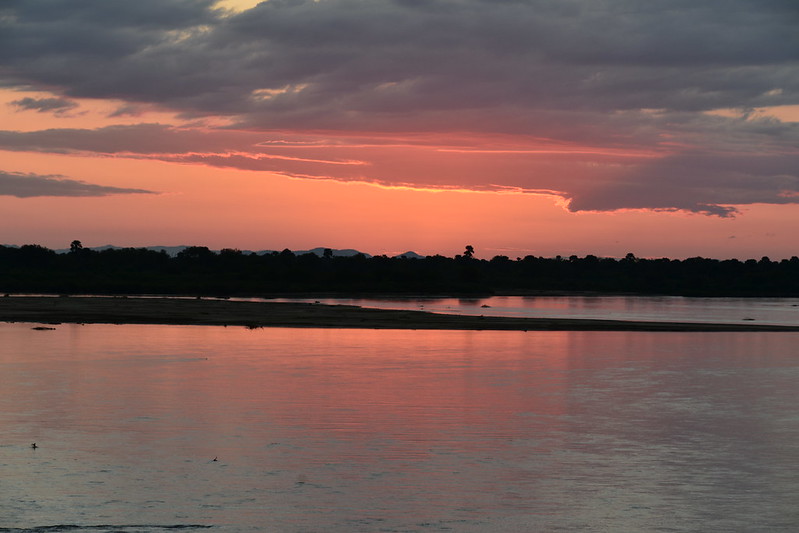
Miombo Woodlands of Nyerere National Park
The Miombo Woodlands of Nyerere � Flora, Wildlife, and Conservation Importance are a critical part of Nyerere National Park in Tanzania. This region supports a diverse range of vegetation, including miombo trees, grasses, and shrubs, which provide habitats for iconic African species like elephants, lions, and…
Read the full guide →
Nyerere Honeymoon Safari
A Nyerere honeymoon safari pairs private riverfront camps, boat trips on the Rufiji, and nights out under open sky in Africa's largest national park, giving couples the kind of space and quiet the busier northern circuit rarely allows. Most honeymooners settle on a three or four…
Read the full guide →
Nyerere National Park Airstrips
Nyerere National Park is reached by a network of small bush airstrips rather than one central airport, and the main ones are Mtemere, Siwandu, Beho Beho, Matambwe, Selous Mbuyu, Kiba, Sumbazi and Stiegler's Gorge. Most fly in safari guests land at the strip closest to their…
Read the full guide →
Nyerere National Park Ecosystem
The Nyerere Ecosystems – Woodlands, Wetlands, and River Systems are a vital part of Nyerere National Park, located in southern Tanzania. Covering diverse habitats like miombo woodlands, expansive wetlands, and the Rufiji River System, these ecosystems support rich biodiversity, including iconic species such as elephants, lions,…
Read the full guide →
Nyerere National Park Facts
Nyerere National Park is the largest national park in Tanzania, spread across roughly 30,893 square kilometres of southern wilderness that was gazetted in 2019 from the northern part of the old Selous Game Reserve. Most people book a Nyerere safari for a boat trip on the…
Read the full guide →
Nyerere National Park For First-Time Goers
Nyerere for First-Time Safari Goers – Costs, Best Parks, and Travel Tips includes essential details for planning a memorable trip to Nyerere National Park, one of the largest protected areas in Africa. Tanzania Safaris in this park typically cost between $500 and $1,000 per person per…
Read the full guide →
Nyerere National Park Gates
Nyerere National Park has two main road entry gates, Mtemere Gate on the eastern Rufiji side near Mloka and Matambwe Gate in the northern sector near Kisaki, both open daily from 6am to 6pm. Road arrivals from Dar es Salaam use Mtemere, while flying safari guests…
Read the full guide →
Nyerere Safari: What to Expect
A Nyerere safari pairs boat trips on the Rufiji River with morning and afternoon game drives and guided walks, so a typical day runs from a 6am drive to a sundowner cruise past hippos and crocodiles. Most first-timers book three or four nights, flying in from…
Read the full guide →
Packing list for a safari in Nyerere National Park Tanzania
Packing for a safari in Nyerere National Park comes down to neutral coloured layers, closed shoes, binoculars, malaria cover and a soft bag that stays under the light aircraft weight limit. Most people book game drives, Rufiji River boat safaris and guided walking safaris on the…
Read the full guide →
Sustainable Tourism in Nyerere: Eco-Lodges, Conservation, Community
Sustainable Tourism in Nyerere – Eco-Lodges, Conservation, and Community Tourism focuses on promoting environmentally responsible travel in Nyerere National Park, one of Tanzania’s largest wildlife reserves. Visitors can stay in eco-lodges designed to minimize environmental impact while enjoying activities like Tanzania Safaris to explore diverse wildlife.…
Read the full guide →
What Is Nyerere National Park Famous For?
Nyerere National Park is famous for being the largest national park in Tanzania, for its Rufiji River boat safaris, and for holding one of Africa's strongest populations of endangered African wild dogs. Travellers book it for big game drives, guided walking safaris and remote fly camping…
Read the full guide →Nyerere and Selous: The Short Answer
Picture one enormous block of bush the size of Switzerland, straddling the Rufiji River in southern Tanzania. For most of the last century that whole block carried a single name, the Selous Game Reserve. It was never uniform, though. A slice in the north was set aside for camera safaris, and the far larger remainder was cut into hunting blocks where paying clients shot big game under licence.
In 2019 Tanzania drew a line along the river. The northern, western and much of the central ground became Nyerere National Park, run for photographic tourism by TANAPA, the national parks authority. The southern hunting blocks stayed as the Selous Game Reserve, managed separately by the wildlife authority TAWA and closed to ordinary safari traffic. So the two names now point at two neighbouring areas with two different jobs, not at the same thing.
When a camp advertises a “Selous safari” today, it almost always sits inside what is legally Nyerere National Park. The old name simply has decades of recognition behind it, and operators are slow to drop a label their guests already know.
Nyerere National Park
The northern part of the old reserve, gazetted in 2019. About 30,893 square kilometres. Managed by TANAPA for photographic safaris, boat trips and walking. This is where lodges, airstrips and game drives sit, and where nearly every visitor actually goes.
Selous Game Reserve
The southern remainder, still carrying the name given in 1922. Run by TAWA as hunting concessions of roughly 1,000 square kilometres each. Closed to standard camera safaris. Most travellers never enter this section at all.
Why the Selous Game Reserve Split Reshaped Southern Tanzania Safaris
Two things drove the change, and money sits behind both of them. National parks pull in far more photographic demand than game reserves do. A reserve reads, to a lot of travellers, as somewhere hunting happens, while a national park signals cameras, families and lodges. Rebranding the northern ground as a park lifted its profile inside Tanzania’s wider safari circuit almost overnight.
The second reason was political and financial. The government of the day argued that trophy hunting brought in far less revenue than the animals could earn alive, in front of a camera, year after year. President John Magufuli put it bluntly at the time, complaining that visitors came to shoot lions while the country saw little benefit. Converting the north to a park locked that ground into photographic use and, in theory, funnelled more of the takings back to the state.
There was a conservation angle folded in as well. Poaching had gutted the elephant herds across the old reserve, and full national park status came with a stronger legal footing for ranger patrols and tighter control of who could move through the northern sector. Whether the split has fixed all of that is a longer argument, but the intent was on the record.
The Two Names Explained: Frederick Selous and Julius Nyerere
The older name honours Frederick Courteney Selous, a British explorer, hunter and later conservationist who spent much of his life in the African bush. He was killed in 1917 during fighting in this very region in the First World War, and the reserve was renamed after him in 1922. The protected area itself is older still, first set aside in 1896 under German East African administration, which makes it one of the oldest reserves on the continent.
The newer name belongs to Julius Kambarage Nyerere, Tanzania’s first president and the man most Tanzanians call the father of the nation. Naming the country’s largest national park after him was a deliberate act of national symbolism, tying the land itself to the story of independence. So the split gave the wilderness two very different namesakes: a hunter of the colonial era on the southern blocks, and the founding president on the northern park.
Quick way to keep it straight. If someone is talking about game drives, boat trips or lodges, they mean Nyerere National Park, whatever name they use out loud. If they mention hunting concessions or blocks, they mean the surviving Selous Game Reserve to the south. The activity tells you which area they are really in.
What the Split Means for Your Photographic Safari
For anyone booking a camera trip, the practical news is good. The whole northern sector, all the water, all the best game country, now falls inside a national park set up specifically for photographic safaris. You are no longer squeezed into a small tourism corner while hunting carried on next door. The lodges, the airstrips and the guiding infrastructure all sit in Nyerere, and the rules there are built around wildlife viewing rather than shooting.
It also means a quieter safari than the northern Tanzania parks. The Serengeti and Ngorongoro pull the big crowds. Nyerere, down in the south, still sees a fraction of that traffic, so a morning drive here can pass without another vehicle in sight. That solitude is one of the real draws, and the split did nothing to spoil it.
One caveat worth setting straight. Because the reserve was split rather than fenced off, animals still move freely across the old boundary. A camera safari in Nyerere and a hunting block in the southern Selous share the same herds. Some travellers feel uneasy about that, and it is a fair thing to weigh up. What you can say plainly is that inside the national park itself, nothing is hunted.
Rufiji River Boat Safaris in Nyerere National Park
The Rufiji River is the spine of any Nyerere safari, and a boat trip on it is the experience the park is known for. This is the largest river in Tanzania, and as it slows across the flatlands it spreads into a chain of lakes, channels and sandbars that hold water long after the surrounding bush has dried out. A Rufiji River boat safari puts you at eye level with hippos and crocodiles, and drifting is a calmer way to watch elephants and buffalo come down to drink.
Boat safaris matter here in a way they simply cannot in most Tanzanian parks, because the northern parks have no comparable river system open to visitors. Lakes such as Manze and Nzerakera stay productive through much of the year, drawing game to their edges when the wider country turns dry. Birdlife along the banks is heavy, with fish eagles, skimmers, herons and kingfishers all common sights from the water.
Sightings are never a certainty, and a slow river hour is still an hour on the water. Most guests find the change of pace worth it on its own, and the odds of close hippo and crocodile viewing are as high here as anywhere in the country.
Big Game and Wild Dogs on a Nyerere Safari
The park carries a full southern cast of big game, and one species in particular gives a Nyerere safari its reputation. The area holds one of the most important populations of African wild dogs left on the continent, a predator that has vanished from much of its former range. Packs den in the dry months, and guides who know their territories can be very good at finding them, though these are wide ranging animals and nothing is promised.
Beyond the dogs you have lions in strong numbers, leopards in the riverine thickets, spotted hyena, giraffe, zebra, buffalo and large numbers of hippo and crocodile along the water. Elephants are here too, recovering slowly from a brutal stretch of poaching. Herds that once topped a hundred thousand across the old reserve fell to a few thousand by the early part of the last decade, and the rebuilding of those numbers is one reason the park protections were tightened.
The same herds that a camera follows in the north of Nyerere may wander south into the old Selous blocks. The line on the map is legal, not physical, and the wildlife has never read it.
Walking Safaris and Game Drives in Nyerere National Park
A walking safari is one of the things the south does better than the crowded north, and Nyerere is built for it. On foot with an armed guide you read tracks, sit with the small detail most drives roll straight past, and approach plains game slowly on their own terms. It is a different register of safari, quieter and more deliberate, and for a lot of repeat visitors it becomes the reason they choose the south at all.
Game drives remain the backbone of most itineraries. Morning and afternoon drives work the tracks between the lakes and along the river, and a few camps run night drives where the concession rules allow, which can turn up genuine nocturnal wildlife such as civet, genet and hunting lions. Fly camping, a night out under a simple mesh tent away from the main lodge, is offered by some operators for those who want the bush at its most stripped back.
Rufiji Boat Safari
The signature outing. Hippos, crocodiles and river birds at close range, with elephants and buffalo often on the banks. Best in the cooler hours of morning or late afternoon.
Walking Safari
On foot with an armed ranger, reading tracks and approaching plains game slowly. Small groups, early starts, the detail a vehicle misses.
Morning and afternoon drives between the lakes and river channels, hunting for wild dogs, lions and leopard in the thickets.
UNESCO Heritage and Conservation on a Nyerere Safari
The wider area carries a serious conservation pedigree. The Selous Game Reserve was inscribed as a UNESCO World Heritage Site in 1982, recognised for the scale of its wilderness and the diversity of wildlife across an ecosystem largely free of permanent human settlement. That listing predates the split by decades and covers the ground that is now Nyerere National Park.
The listing has not been trouble free. Heavy elephant poaching pushed the site onto UNESCO’s list of World Heritage in danger, and a large hydropower dam project on the Rufiji at Stiegler’s Gorge drew sharp criticism from conservation bodies worried about the river system that the whole area depends on. These tensions are part of the honest picture of the place. The safari experience is genuine, and so are the pressures on the land behind it.
For a visitor, the heritage status is a useful signal rather than a day to day concern. It marks the area out as one of Africa’s great remaining wild blocks, and the money a photographic safari brings in is now a bigger part of the case for keeping it that way.
Best Time for a Nyerere National Park Safari
Timing shapes a Nyerere trip more than most people expect, mainly because of the water. The long dry season from June to October is the reliable window. Bush thins out, animals concentrate around the shrinking river and lakes, and the tracks stay firm for driving. This is peak game viewing and peak demand together.
The green season, roughly the wetter months either side of the year’s turn, brings different rewards and different risks. Birding is at its best, the country looks its greenest, and prices soften, but heavy rain can close roads and some camps shut entirely for the wettest stretch. The two rainy periods, a longer one around March to May and a shorter spell late in the year, are the trickiest to plan around.
June to October, Dry Season
The prime window for a Nyerere safari. Game gathers at the water, driving conditions stay good, wild dog denning falls in this stretch. Busiest and most expensive.
November and December, Short Rains
Green landscapes, strong birding, fewer vehicles. Showers are usually short. A good compromise for value and scenery.
March to May, Long Rains
Heaviest rainfall, some camps close, roads can flood. Lowest prices and green country for those who do not mind the wet.
Getting to Nyerere National Park for Your Safari
Most visitors fly. Scheduled light aircraft run from Dar es Salaam and from the Zanzibar coast to a set of airstrips inside the park, and the hop takes under an hour, which is why so many people pair Nyerere with a few days on the beach. The flight also spares you a long drive over variable roads.
Driving is possible for those who prefer it, with the park lying somewhere between 184 and 230 kilometres from Dar es Salaam depending on the entry gate and route. The drive takes several hours and the final stretches can be rough, so a proper safari vehicle matters. Whichever way you arrive, the northern gates and airstrips all feed into Nyerere National Park, the photographic side, rather than the closed hunting ground to the south.
Frequently Asked Questions
Is Nyerere National Park the same as the Selous Game Reserve?
Not quite, and this is the heart of the confusion. They were one protected area until 2019, when the northern part was made into Nyerere National Park for photographic safaris and the southern hunting blocks kept the Selous name. Most safari camps sit inside Nyerere but still trade under the older Selous label because guests recognise it.
Why was the Selous split into two in the first place?
Money and status, mostly. National parks attract more camera tourism than game reserves, so rebranding the north lifted its profile. The government also argued that live animals earn more over time than trophy hunting, and full park status gave stronger legal cover for poaching patrols after years of elephant losses.
How much does it cost to visit Nyerere National Park?
Park entry runs around 50 US dollars per adult for each 24 hour period, with children charged roughly 20 dollars. Camps and lodges inside the park add a concession fee of about 70 to 80 dollars per person per night. Activity fees vary, with boat safaris commonly in the region of 24 to 40 dollars and night drives around 59 dollars. Rates carry local tax and shift over time, so confirm current figures when you book.
What is the best time for a Nyerere safari?
The dry months of June to October give the most reliable game viewing, because animals gather at the river and lakes and the tracks stay firm. The short rains late in the year suit birders and value seekers. The long rains from March to May are the wettest and some camps close.
What can you actually do on a Nyerere safari?
Three things stand out. Boat safaris on the Rufiji River for hippos, crocodiles and birds, walking safaris on foot with an armed guide, and classic game drives hunting for wild dogs, lions and leopard. A few camps also offer night drives and fly camping. The river based activities are what set this park apart from the northern circuit.
Is there still hunting in the area?
Yes, but not where you go on a camera safari. Hunting continues in the southern blocks that remain the Selous Game Reserve, which are closed to normal tourism. Inside Nyerere National Park, the photographic side, nothing is hunted. Animals do move across the old boundary, which is worth knowing when you plan.