
Wildlife conservation in Nyerere National Park centres on protecting one of Africa’s largest surviving elephant and predator populations after years of heavy poaching nearly emptied the old reserve. Travellers support that protection directly through photographic safaris, Rufiji boat trips and the park fees that pay for ranger patrols. Nyerere National Park lies in southern Tanzania along the Rufiji River, carved in 2019 from the northern two thirds of the Selous Game Reserve, and it now ranks as the biggest national park in East Africa.
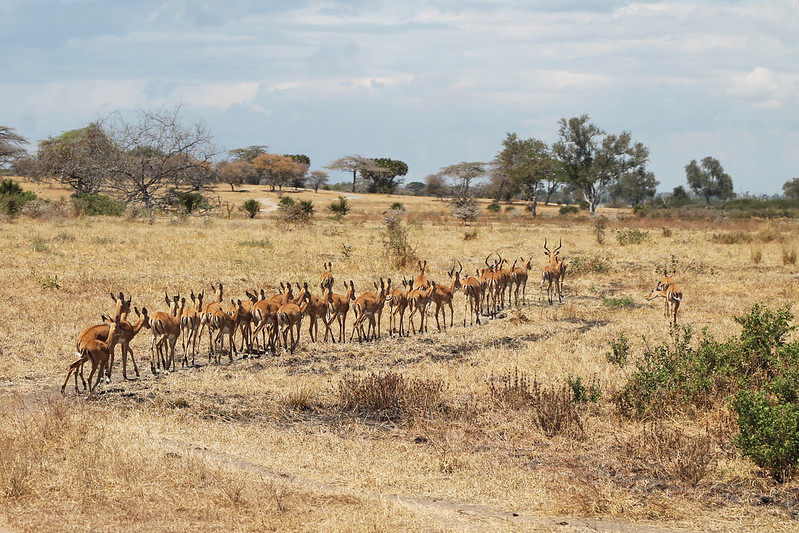
The story here is not a tidy one. It runs from a near collapse of the elephant herds, through a slow and still fragile recovery, into a dam project that split conservationists down the middle. If you are weighing up a Nyerere safari and want to understand what your visit actually pays for, this is the honest version. Real numbers, real setbacks, and the reasons the park still matters for wildlife across the whole southern circuit.
From Selous Game Reserve to Nyerere National Park Safari Country
For most of the twentieth century this wilderness was the Selous Game Reserve, a hunting reserve first set aside in the colonial era and inscribed as a UNESCO World Heritage Site in 1982. In 2019 the Tanzanian government split it. The northern section, roughly 30,893 square kilometres, was gazetted as Nyerere National Park and handed to the Tanzania National Parks Authority. The remaining land to the south stayed on as the Selous Game Reserve, still zoned partly for hunting.
That change of status is the single biggest conservation event in the park’s recent history. A game reserve allowed regulated trophy hunting; a national park does not. Under TANAPA the northern block shifted to photographic tourism only, which brought tighter patrols, a permanent ranger presence and a clearer funding line through visitor fees. For a place that had lost most of its elephants a few years earlier, moving to full national park protection was meant to draw a line under the worst of the killing.
Naming can confuse first time visitors. You will still see camps and operators using “Selous” in their marketing, because the brand carries weight and the ecosystem is the same. When you book a Nyerere National Park safari, you are visiting the protected northern park, reached most often by light aircraft from Dar es Salaam or by road to the Mtemere and Matambwe gates.
The Elephant Poaching Crisis That Emptied the Reserve
To understand why conservation dominates every conversation here, you have to look at what happened to the elephants. In the mid 1970s the Selous held somewhere near 110,000 elephants, one of the greatest concentrations anywhere on the continent. By 1989 that number had fallen to around 30,000 during an earlier wave of ivory poaching, then recovered strongly to more than 70,000 by 2006 under determined wardens.
Then came the second collapse. Between 2007 and 2014 the reserve lost close to 80 percent of its elephants, dropping from about 70,000 to roughly 15,000. At the peak of that crisis, criminal syndicates were killing an average of six elephants a day. Ivory moved out through organised trafficking networks, and the reserve that had once been a byword for elephant abundance became a symbol of how fast a population can crash.
That history is the reason a wildlife conservation safari in Nyerere is framed so heavily around anti poaching. The recovery is real but partial. A 2022 aerial census of the wider Nyerere, Selous and Mikumi ecosystem found that most large mammal populations had held stable compared to earlier counts, a sign that the bleeding had stopped, though numbers remain far below the historic highs.
Selous elephants, mid 1970s
Around 110,000 animals, among the densest elephant populations on the continent and a core reason for the reserve’s World Heritage listing.
Selous elephants, 2014 low point
Roughly 15,000 animals after the 2007 to 2014 poaching wave, a fall of close to 80 percent in seven years.
Nyerere and Selous today
Populations broadly stable since the 2018 to 2022 counts, held by stronger patrols but still a fraction of the mid 1970s peak.
Ranger Patrols and Poaching Recovery on a Nyerere Safari
The turnaround owes a great deal to boots on the ground. Conservation groups working alongside TANAPA, among them the Frankfurt Zoological Society and WWF, backed a model built around better trained rangers, aerial surveillance, intelligence work against trafficking networks and steady funding. WWF set out a plan aimed at zero poaching in the Selous, built on cooperation between government, donors and enforcement teams rather than any single quick fix.
What this looks like on a Nyerere National Park safari is a park that feels genuinely patrolled. Ranger posts sit along the Rufiji and at the main gates, and the shift to photographic tourism gave those teams a reason to keep large tracts of country under watch year round. The presence of paying visitors, guides and camps also puts more eyes across the park, which makes life harder for anyone moving through it illegally.
None of this makes the park invulnerable. Poaching pressure eased rather than vanished, and the same census work that reported stable numbers also flagged how much depends on sustained funding. When tourism dips, patrol budgets feel it. That link between visitor money and protection is not a marketing line here; it is how the enforcement actually gets paid for.
The UNESCO World Heritage in Danger Listing
In June 2014 the World Heritage Committee placed the Selous Game Reserve on the List of World Heritage in Danger. The trigger was plain: rampant poaching had cut wildlife numbers hard, with elephant and rhino populations down by almost 90 percent since the 1982 inscription. The danger listing was a formal warning that a globally important site was slipping.
Poaching was not the only concern the committee raised. The listing and later reviews pointed to a cluster of pressures on the property, including the Mkuju River uranium mine on the southern edge, proposed dams, oil and gas exploration blocks, and road schemes cutting through wildlife country. A boundary change had already excised around 400 square kilometres from the southwestern border to allow uranium extraction. For anyone reading up before a southern Tanzania safari, that in danger status is a useful shorthand for how many threats were stacking up at once.
Elephant and rhino numbers had fallen by almost 90 percent since 1982. The in danger listing was the world putting Selous on notice.
African Wild Dog Tracking Safaris and Predator Protection
Elephants get the headlines, yet Nyerere matters just as much for a rarer animal. The African wild dog, also called the painted dog, is one of the most endangered carnivores in Africa, and the Selous and Nyerere country holds one of the last large populations left anywhere. A wild dog tracking safari here has a real chance of finding a pack, which is far from true across most of the continent.
The numbers back up the reputation. Camera trap surveys spread over about 4,674 square kilometres of Nyerere and Selous between 2020 and 2022 identified 222 individual wild dogs, and broader estimates put the park’s population in the region of several hundred animals. Researchers describe the Selous and Niassa system as one of the most important remaining strongholds for the species, worth protecting over the long term through steady monitoring.
Sightings are never guaranteed, since packs range over huge distances and move fast. Guides tend to look for them in the cooler hours on a morning game drive, often near denning sites in the dry months when a pack stays put to raise pups. Seeing the dogs at all is a marker of how much the wider protection effort is working, because they only thrive where prey is healthy and human pressure is low.
The Julius Nyerere Hydropower Dam Controversy on the Rufiji
No account of conservation here is complete without the dam, and it deserves a fair hearing on both sides. The Julius Nyerere Hydropower Station, built across the Rufiji at Stiegler’s Gorge inside the former reserve, is a hydroelectric project with an installed capacity of about 2,115 megawatts. Construction began in 2019, the same year the park was gazetted.
The case for it is straightforward. Tanzania has wrestled with electricity shortages for decades, and governments going back to the 1960s eyed Stiegler’s Gorge as a way to add large amounts of generation at once. Supporters argue the dam brings reliable electricity, supports industry and jobs, and finally delivers a project studied since the era of Julius Nyerere himself. For a country pushing to expand its grid, that is a serious argument.
The conservation case against it is equally serious. The reservoir behind the dam is among the largest in Africa, flooding a wide stretch of the park and altering habitats that wildlife and fish depend on. Critics warn it blocks movement corridors, and that by blunting the seasonal floods of the Rufiji it weakens the downstream delta, a Ramsar wetland of global value, along the roughly 180 kilometre run to the coast. Many feared the works would undo hard won gains just as animal numbers were steadying. Both things are true at once: the country gains electricity, and the river ecosystem changes in ways that are hard to reverse. On a Rufiji River safari today you are looking at a waterway that now carries that tension in its flow.
How Photographic Tourism and Boat Safaris Fund Conservation
Here is where a visitor fits into the picture. The move to a national park tied the area’s future to photographic tourism rather than hunting or extraction, and that model only works if people come. Park entry fees, concession fees paid by camps, and boat fees flow to TANAPA and help underwrite the patrols, gate posts and management that keep the park standing.
The signature experience is the Rufiji boat safari, and it is one of the few places in Tanzania where you watch wildlife from the water. Drifting past pods of hippo, big crocodiles hauled out on sandbanks and birds crowding the channels, you are also, quietly, paying into the system that protects them. Game drives and guided walking safaris do the same job. Every fee is part of the funding chain that replaced trophy hunting money after 2019.
Dry season, June to October
Prime months for a Nyerere safari. Animals gather near the shrinking Rufiji and its lakes, making game drives and boat safaris productive, and this is the busiest window for the park’s tourism income.
Green season, November to March
Rains bring bird migrants and newborn animals. Some camps close and access can be harder, yet the quieter season still funds off peak conservation work and rewards patient wildlife watching.
TANAPA and Community Roles in Protecting the Ecosystem
Protection does not stop at the park boundary. TANAPA runs enforcement and tourism inside Nyerere, but the animals move well beyond the gazetted line, into village land, wildlife management areas and the corridors linking Nyerere to Mikumi and on toward Niassa in Mozambique. Keeping those corridors open is part of why conservation groups work with communities living along the edges of the park.
Handpicked Nyerere safari packages
The logic is simple enough. People who see a benefit from wildlife, through tourism jobs, revenue sharing or reduced conflict, have a reason to tolerate elephants raiding crops or predators near livestock. When that benefit is absent, poaching and retaliation rise. A functioning conservation safari economy spreads at least some of the value outward, which is why community projects and anti poaching cooperation matter as much as the ranger patrols inside the park.
It remains a work in progress. Balancing a growing human population, the demand for electricity from the dam, farmland pressure and the needs of one of Africa’s great wildlife systems is not solved, and honest guides will tell you so. What Nyerere offers is a rare second chance for a place that came close to losing its elephants, and a clear way for visitors to be part of holding the line.
Nyerere Conservation Safari Questions Answered
What is being done to protect wildlife in Nyerere National Park?
Since the 2019 upgrade to national park status, TANAPA has run the northern block as a photographic tourism park with a permanent ranger presence, gate control and aerial surveillance. Conservation partners including the Frankfurt Zoological Society and WWF support training, monitoring and anti poaching work aimed at holding elephant and predator numbers steady after the earlier crash.
How much does it cost to visit Nyerere National Park?
Park entry currently runs about 50 US dollars per adult for each day and around 20 US dollars for a child under 15. Guests staying at camps inside the park usually pay a concession fee of roughly 80 US dollars per person per night. A Rufiji boat safari carries its own fee on top, commonly in the region of 24 to 40 US dollars per person. Most safari packages fold these fees into the overall price, so check what your operator has already included.
Why was the Selous Game Reserve listed as World Heritage in Danger?
The World Heritage Committee added Selous to the danger list in 2014 after poaching cut elephant and rhino numbers by almost 90 percent since the 1982 inscription. Later reviews also flagged threats from the Mkuju uranium mine, proposed dams, oil and gas exploration and road schemes, all pressing on the same ecosystem at once.
Can I still see African wild dogs on a Nyerere safari?
Yes, and Nyerere is one of the best places left to try. The Selous and Nyerere country holds one of Africa’s largest surviving wild dog populations, with camera trap studies confirming hundreds of animals. Sightings are never certain because packs roam widely, but a wild dog tracking safari here has better odds than most parks, especially on early morning game drives in the dry season.
Is the Julius Nyerere dam bad for the park’s wildlife?
It is genuinely contested. The hydroelectric dam at Stiegler’s Gorge gives Tanzania a large new source of electricity, which supporters see as a national gain. Conservationists counter that its huge reservoir floods habitat and that reduced seasonal flooding downstream harms the Rufiji delta and its wetlands. Both effects are real, and the long term outcome for wildlife is still being watched.
Does my safari money actually help conservation?
Directly, yes. Park entry, concession and boat fees go to TANAPA and help pay for the patrols and management that keep the park protected. Because the area now depends on photographic tourism rather than hunting, visitor numbers and the money they bring are tied to how well the park can fund its ranger teams, so a quiet season is felt on the ground.